Water in Basement After Heavy Rain? Causes and What to Do
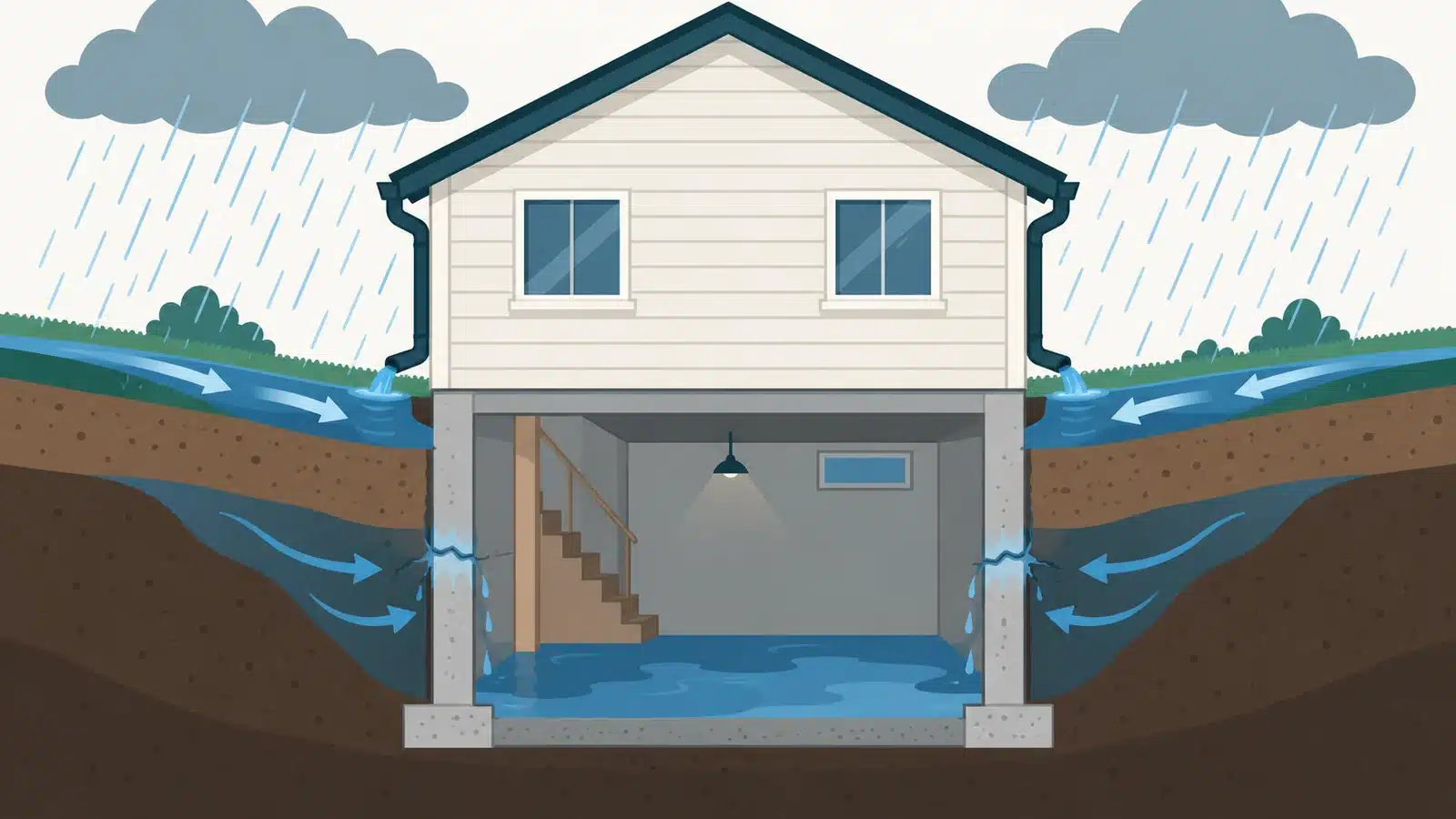
Quick answer: Water in the basement after heavy rain usually comes from roof water dumped too close to the house (gutters and downspouts), ground that slopes toward the foundation, window wells that fill, cracks in the walls or floor, a sump pump that cannot keep up, or water pushed up from the soil under pressure. Less often it is sewage backing up through a floor drain. Make it safe first, then find where the water gets in, and fix the outside drainage before paying for waterproofing.
Safety first: the CDC warns: “NEVER turn power on or off yourself or use an electric tool or appliance while standing in water.” If you would have to walk through water to reach the main switch, call an electrician or your utility. Never run a generator or gas-powered pump in the basement or near openings. If the water smells of sewage, treat it as contaminated: wear gloves and boots and keep children and pets out.
In this guide
What to do right now
- Make it safe: keep out of standing water near outlets, appliances or the panel until the power to the basement is off.
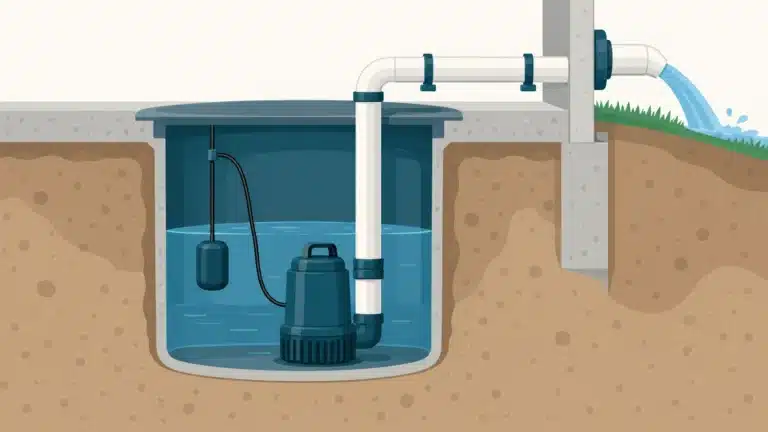
- Check the sump pump, if you have one: is it running, and is water coming out of the outdoor discharge? If not, see sump pump not working.
- Remove the water: a wet/dry vacuum for shallow water, a pump for deeper water. If the basement is deeply flooded from surrounding saturated ground, North Dakota State University Extension advises removing about a third of the water each day, because pumping too fast can push walls in or heave the floor.
- Dry within 24 to 48 hours: the EPA says to dry water-damaged areas and items within 24 to 48 hours to prevent mold. Move belongings out, run fans and a dehumidifier, and pull up wet carpet and pad.
- Take photos of the water and damage for your insurer before you clean up.
- Note where the water appeared: it is the best clue to the cause.
Where the water gets in tells you why
| Where you see water | Most likely cause | Go to |
|---|---|---|
| Along one wall, below a downspout or low spot outside | Roof water or grading sending water at the wall | Causes 1 and 2 |
| Under or around a basement window | Window well filling up | Cause 3 |
| A line of water from a crack in the wall | Wall crack | Cause 4 |
| Around the edge where the floor meets the wall | Groundwater under pressure (the cove joint) | Cause 5 |
| Rising from the sump pit or around it | Sump pump not keeping up or failed | Cause 6 |
| Coming up through a floor drain, smelly | Sewer or storm drain backup | Sewer backup |
Why water gets into the basement after heavy rain
1. Gutters and downspouts
A roof sheds a lot of water in a storm. Clogged or overflowing gutters and short downspouts drop it right at the foundation. The U.S. Department of Energy’s Building America guide says downspouts should end at least 5 feet from the foundation; Iowa State University Extension suggests 5 to 10 feet for houses with water problems. Clean the gutters, add downspout extensions and make sure the water runs away from the house. Iowa State also advises not to send downspouts into the perimeter drain tile.
2. Ground sloping toward the house
Soil settles over time, especially the backfill next to a foundation. InterNACHI, summarizing the residential building code, says the ground should drop at least 6 inches within the first 10 feet. Build up low spots with soil so water runs away from the wall, keeping it below siding, and expect to top up settled fill after a year or so.
3. Window wells
A window well without a drain or cover can fill like a bucket and push water through the window. FEMA’s basement flooding guidance recommends hinged covers and gravel bottoms. Clear leaves out and check the window seal.
4. Cracks in the walls or floor
Most poured walls have small shrinkage cracks; water uses them in heavy rain. Fix the outside drainage first, then have leaking cracks sealed. Professional crack injection typically costs $800 to $1,500 per crack, according to Angi. Cracks that are wide, growing, or have one side pushed in are structural and need an engineer or foundation contractor.
5. Groundwater pushing up (hydrostatic pressure)
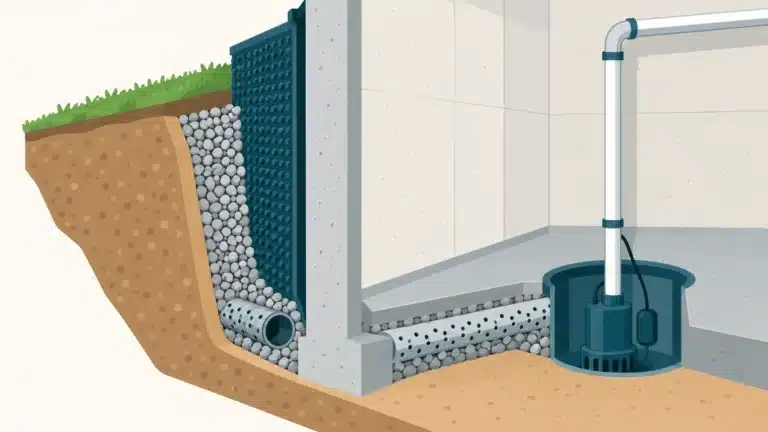
After a long soaking rain, saturated soil can push water through the joint where the floor meets the wall, or up through the floor. That is why some basements only leak in heavy storms. The usual fix is interior drain tile leading to a sump pump, or exterior drainage. See French drain cost and basement waterproofing cost.
6. A sump pump that fails or cannot keep up
Storms bring power outages just when the pump is needed most. Iowa State Extension recommends a battery backup, an alarm or a generator for sump pumps. If the pump runs nonstop, see sump pump running constantly; for a dead pump, sump pump not working; for backup options, battery backup sump pump.
Is it groundwater or a sewer backup?
FEMA lists sewer lines backing up under the house as one of the main ways basements flood. Water that rises from a floor drain, smells of sewage or carries debris is a backup, not groundwater. Do not touch it without gloves and boots, call a plumber, and ask about a backwater (backflow) valve, which FEMA describes as a device that keeps water from backing up into the basement. See septic tank overflowing if you are on a septic system.
Will insurance cover it?
It depends on the cause and your policy. Standard homeowners policies typically exclude flooding from surface water or rising groundwater, which needs separate flood insurance, and sewer or sump backup is often an optional add-on. Call your insurer before cleanup if you can, and photograph everything.
Use a licensed electrician for power in a wet basement and a plumber or waterproofing contractor for repairs. Suggest a guide or report a correction.
What fixes usually cost
Angi’s basement waterproofing guide (updated October 16, 2026) gives these typical prices:
| Fix | Typical cost |
|---|---|
| Basement waterproofing, national average | $5,245 (most pay $2,460 to $8,205) |
| Interior waterproofing, average | About $3,000 |
| Exterior waterproofing, average | About $7,000 |
| Epoxy crack injection | $800 to $1,500 per crack |
| Interior French drain | $60 to $120 per linear foot |
| Sump pump | $1,200 to $2,500 |
Gutter cleaning, downspout extensions and regrading usually cost far less, which is why they come first.
Frequently asked questions
Is it normal to get water in the basement after heavy rain?
A little dampness in an older basement is common, but standing water is a sign that drainage needs fixing. Find where it gets in and start with gutters, downspouts and grading.
Why did my basement suddenly flood?
A sudden flood usually means something failed during the storm: the sump pump stopped or lost power, a downspout came loose, a window well filled, or a sewer or storm drain backed up.
How do I get rid of standing water in my basement?
Once the power is safely off, use a wet/dry vacuum for shallow water or a pump for deeper water, then dry everything within 24 to 48 hours with fans and a dehumidifier.
Does homeowners insurance cover water in the basement from rain?
Usually not if it is surface flooding or groundwater, which needs flood insurance. Sewer or sump backup may be covered with an endorsement. Check your policy.
How much does it cost to fix water in the basement?
From almost nothing for gutter and downspout fixes to several thousand dollars for drain tile and a sump pump. Angi puts the average waterproofing job at about $5,245.
Related: Basement waterproofing cost · French drain cost · Sump pump check valve
Sources: CDC: reentering a flooded home · EPA: mold and moisture · NDSU Extension: cleaning flooded basements · Iowa State Extension: wet basements · U.S. DOE Building America: gutters and downspouts · InterNACHI: foundation grading · FEMA: mitigation and basement flooding · Angi: basement waterproofing cost.
Related: Water seeping through the basement floor · Which foundation cracks are serious · Water in a crawl space
Updated October 22, 2026. Written and edited by Jordan Hale. General educational guidance.