Water Seeping Through Basement Floor? Causes and Fixes
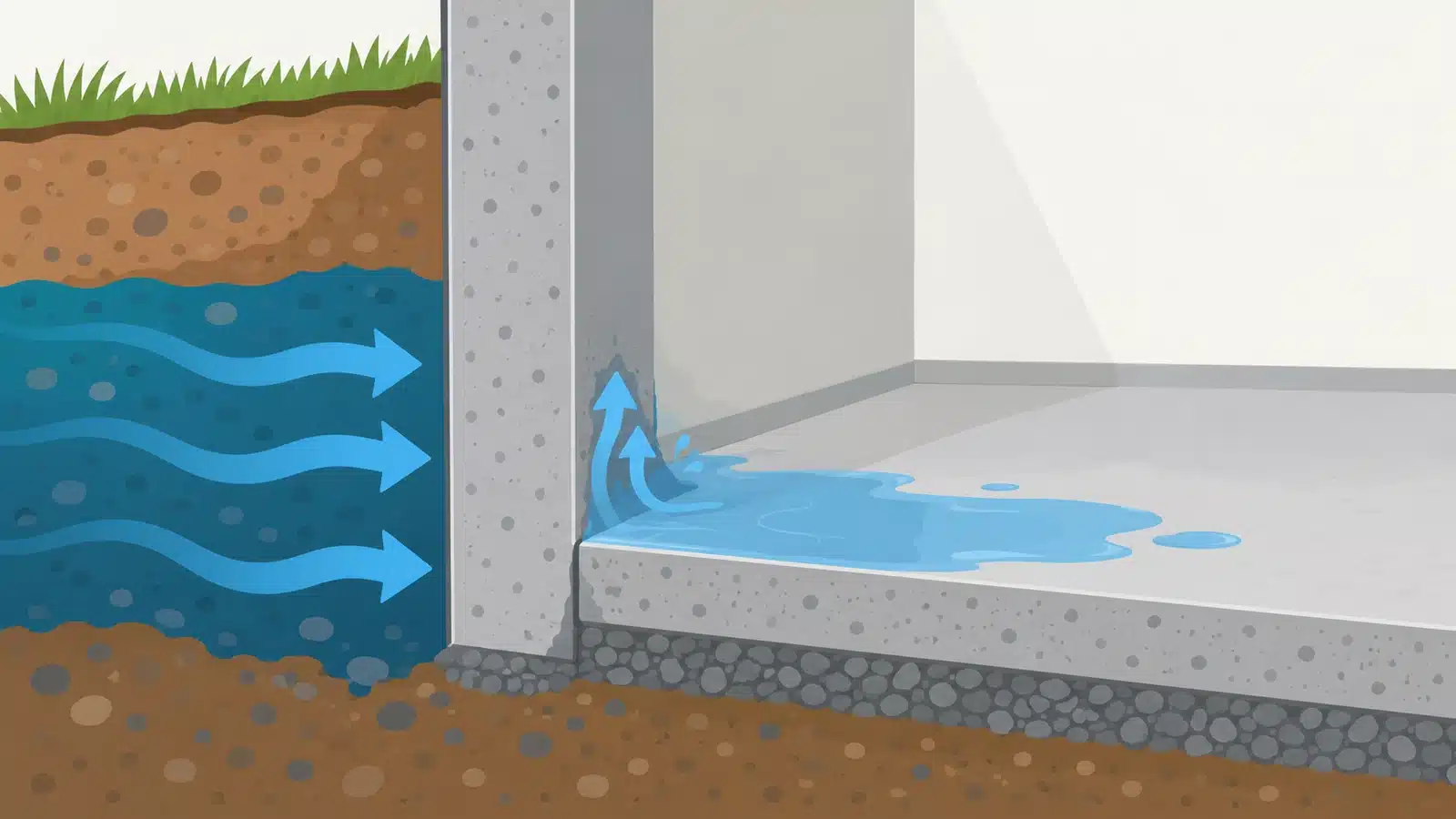
Quick answer: Water seeping through basement floor slabs usually comes from groundwater pushing up under the slab (hydrostatic pressure) and finding the joint where the wall meets the floor or a crack in the slab, often after heavy rain or where the water table is high. First rule out condensation and a plumbing leak, then fix outside drainage: gutters, downspouts and grading. If water still comes in, the usual long-term fix is an interior drain tile system feeding a sump pump, which Angi and This Old House put at $60 to $120 per linear foot.
In this guide
Is it seepage, condensation or a plumbing leak?
A damp floor can come from three very different sources, and each has a different fix. Run these simple checks before you spend money:
| Test | How to do it | What the result means |
|---|---|---|
| Foil test | Tape a square of aluminum foil to the damp floor or wall, sealing all four edges. Check after 24 hours (This Old House) or a few days (Family Handyman). | Moisture under the foil: water coming through the concrete. Moisture on top: condensation from humid air. |
| Water meter test | Read your water meter when no water is being used, then read it again two hours later (EPA WaterSense). | If the reading changed, you probably have a plumbing leak somewhere in the house. |
| Timing | Note when the floor gets wet. | Wet only after storms or snowmelt points to runoff. Wet all the time points to groundwater (This Old House). |
| Look at the pipes | Check cold water lines over the wet area. | Sweating cold pipes can drip onto the floor (Bob Vila). |
If the foil test shows condensation, the fix is humidity control, not waterproofing. The EPA recommends keeping indoor humidity below 60 percent, ideally between 30 and 50 percent. A dehumidifier, insulation on cold pipes and better air movement usually solve it.
What causes water seeping through basement floor slabs?
Concrete looks solid, but as Family Handyman puts it, “it’s actually porous.” A basement is a concrete box sitting in the soil, and water in that soil will find the easiest way in.
Hydrostatic pressure
Hydrostatic pressure is “the weight of the water surrounding your basement walls,” as Bob Vila defines it. When soil around and under the house is saturated, that water pushes against the walls and up against the slab. Angi notes that a rising water table increases this pressure and can lead to cracks and leaks.
High water table
In some areas the groundwater sits close to the basement floor, especially in wet seasons. This Old House describes this “subsurface seepage” as looking like rain runoff but happening all the time.
The cove joint
The cove joint is the seam where the wall meets the floor, and This Old House lists it as a common water entry point. Family Handyman explains that builders leave a small gap there on purpose when pouring, and advises against simply sealing it, because blocking it can push water up through the floor instead.
Floor cracks
Shrinkage and settling cracks in the slab give pressurized water an easy path. A crack that is heaving upward is a different matter; Bob Vila says that needs urgent attention from a foundation specialist.
Grading, gutters and drains
Soil that slopes toward the house, overflowing gutters and short downspouts all dump water next to the foundation. Clogged drain tile, a backed-up floor drain or a failed sump pump can also put water on the floor (Angi).
What to do first
Safety first: If there is standing water near outlets, extension cords, a furnace or a water heater, don’t walk through it. Only shut off power at the panel if you can reach it from a dry spot; otherwise call an electrician or your utility.
- Dry it out quickly. The EPA says to dry water-damaged areas and items within 24 to 48 hours to prevent mold. Use a wet vac, fans and a dehumidifier.
- Run the tests above to rule out condensation and plumbing.
- Map the water. Photograph where it appears (along the wall edge, at a crack, or across the slab) and note the date and weather.
- Check the sump pump if you have one. Pour water into the pit and make sure it switches on. If it doesn’t, see sump pump not turning on.
- Clean gutters and extend downspouts. Recommended discharge distances vary: at least 4 feet (This Old House), 4 to 6 feet (Angi), at least 6 feet (Family Handyman), and up to 15 feet in another This Old House guide. Farther is better if your yard allows.
- Check the grading. The International Residential Code calls for ground to drop at least 6 inches within the first 10 feet from the foundation, as summarized by InterNACHI. Family Handyman suggests about 1 inch per foot over the first six feet.
If the water shows up mainly during storms, our guide to water in the basement after rain walks through the outside fixes in more detail.
How to fix water coming up through a basement floor: cheapest to most expensive
Work through these in order. Start with the cheap outside fixes; there’s no point paying for drain tile if a disconnected downspout is the real problem.
| Fix | Typical cost | When it helps |
|---|---|---|
| Clean gutters, add downspout extensions | Low; underground downspout runs $200–$2,000 (Angi) | Water appears after rain near downspouts |
| Regrade the yard | $500–$3,000 (Angi) | Soil slopes toward the house |
| Seal floor cracks | $100–$200 for a small slab crack (HomeGuide) | Water enters at one visible crack |
| Interior waterproofing paint or sealer | $1–$8 per sq ft (Angi; This Old House) | Dampness, not active leaks |
| Sump pump installation | $1,200–$2,500 (Angi; This Old House) | Groundwater needs somewhere to go |
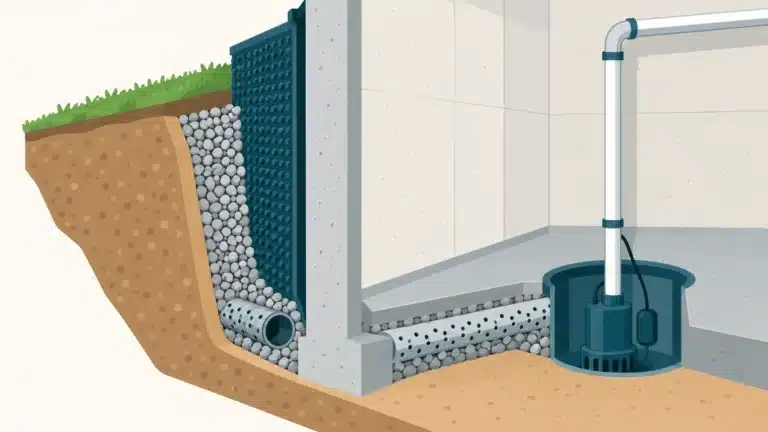
| Interior drain tile (interior French drain) | $60–$120 per linear ft (Angi; This Old House); $4,000–$17,000 total (HomeGuide) | Persistent seepage at the cove joint or across the floor |
| Exterior excavation and waterproofing | About $7,000 average (Angi); $7,000–$15,000 (This Old House); $10,000–$15,000+ (HomeGuide) | Severe or wall-wide leaks |
Costs checked October 28, 2026. Angi’s waterproofing data was updated Oct. 16, 2026, and This Old House’s on Mar. 4, 2026; HomeGuide shows no update date. Angi reports a national average of $5,245 for basement waterproofing, with most homeowners paying $2,460 to $8,205.
A note on coatings: Family Handyman advises against waterproofing a floor that is actively leaking; call a professional instead. Coatings are meant for dampness, not active water.
For deeper pricing, see basement waterproofing cost, French drain cost and sump pump replacement cost.
What does efflorescence on basement walls mean?
Efflorescence is the white, chalky or crystal-like deposit you sometimes see on concrete or block. Angi (updated July 2026) explains that it forms when water moves through the concrete and evaporates, leaving salts behind. It’s a sign that water is passing through the wall or floor, even if you never see it wet.
- New concrete: Some efflorescence from construction water is normal and usually fades within two to three years.
- Older basements: Efflorescence that appears later is linked to leaks, poor drainage and cracks.
- Cleanup: Scrub with water and a stiff brush. For stubborn spots, Angi suggests 1 part vinegar to 4 parts water, then rinse.
- Mold? Efflorescence itself won’t turn into mold, but the moisture behind it can feed mold. This Old House describes efflorescence as white, powdery mineral deposits; if you see fuzzy or dark growth instead, or you’re unsure, have it checked.
If it comes back after cleaning, the water source hasn’t been fixed.
When should you call a pro?
- Water keeps coming in after you’ve fixed gutters, downspouts and grading.
- The floor is cracked and heaving, or wall cracks are horizontal or growing; see cracks in foundation walls.
- The water meter test points to a hidden plumbing leak (call a plumber).
- The basement flooded, or you see or smell mold.
A good waterproofing quote should name the water source, show the drainage layout and sump location on a sketch, list linear feet of drain tile, say how floor concrete will be removed and patched, and spell out the warranty. Get at least two bids for the same scope.
Basement floor seepage FAQs
Is it normal for water to come up through the basement floor?
No. Some dampness and efflorescence on concrete are common, but water seeping through means groundwater pressure or poor drainage is reaching the slab. Rule out condensation and plumbing, then fix outside drainage first.
How do you relieve hydrostatic pressure under a basement floor?
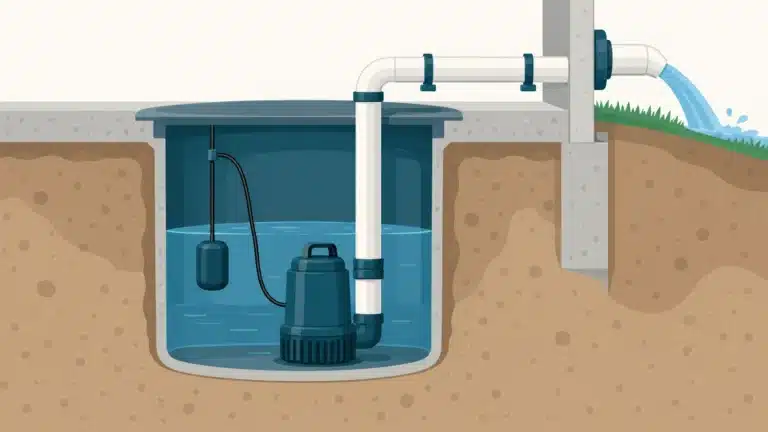
Give the water a path out. Interior drain tile around the perimeter collects water before it builds up and carries it to a sump pump, which pumps it outside. Good grading and downspouts reduce how much water reaches the soil in the first place.
Can I seal my basement floor to stop water from seeping in?
Not if it’s actively leaking. Family Handyman advises against waterproofing a floor with active leaks and against sealing the cove joint. Sealers suit dampness; real seepage needs drainage.
Will a dehumidifier stop water seeping through the floor?
No. A dehumidifier controls condensation and humidity, which the EPA recommends keeping below 60 percent. It can’t stop liquid water pushing through concrete.
Updated October 28, 2026. Written and edited by Jordan Hale. General educational guidance; use a qualified professional for structural, electrical or mold work.