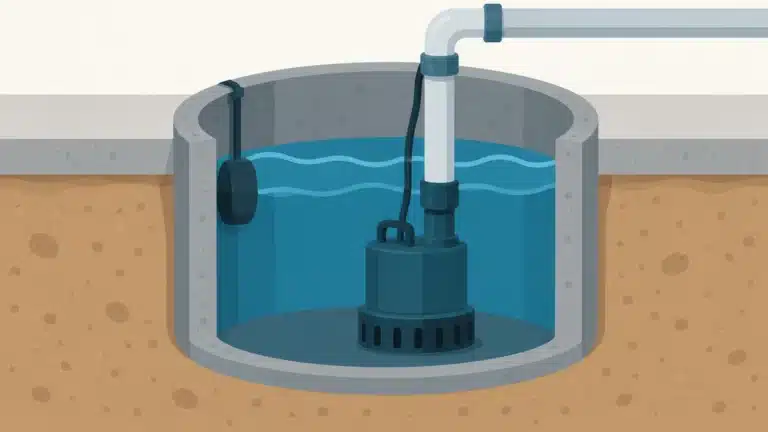
Sump Pump Check Valve: Where It Goes and Signs It Is Bad
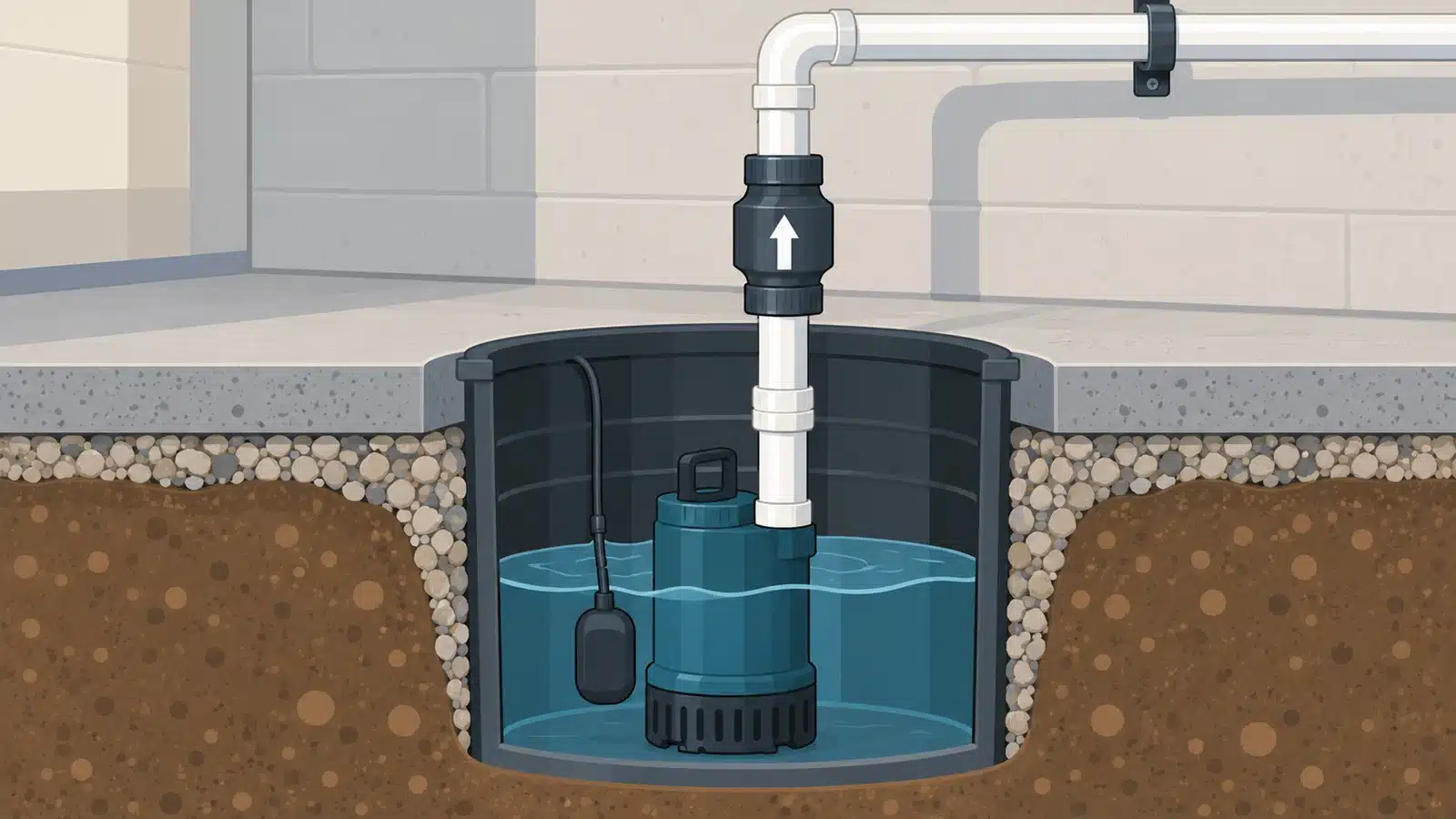
Quick answer: A sump pump check valve is a one-way valve in the discharge pipe that stops pumped water from falling back into the pit when the pump shuts off. It goes in the vertical pipe a short way above the pump, with the arrow on the valve pointing away from the pump (up, toward the discharge). Signs it has failed are a pump that turns on and off far more often than it used to, water rushing back into the pit after each cycle, or a pump that runs but moves no water because the valve is stuck or backward. A loud bang when the pump stops is the valve slamming shut, which a quiet (spring-loaded) check valve fixes.
Safety first: unplug the pump before working on the discharge pipe or check valve, and expect the water standing above the valve to drain out when you loosen it.
In this guide
What a sump pump check valve does
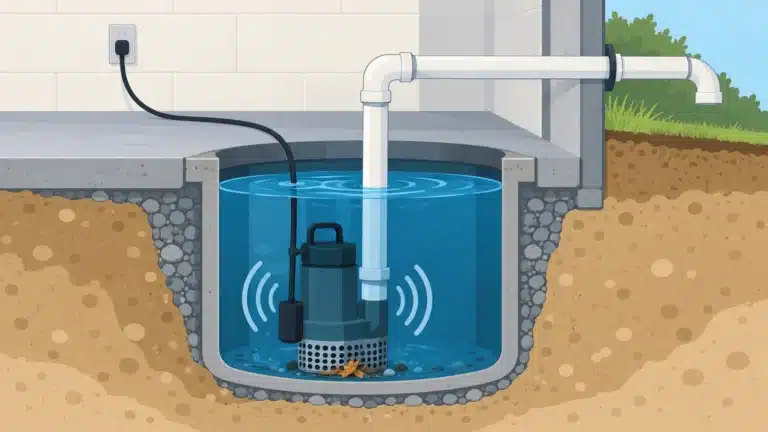
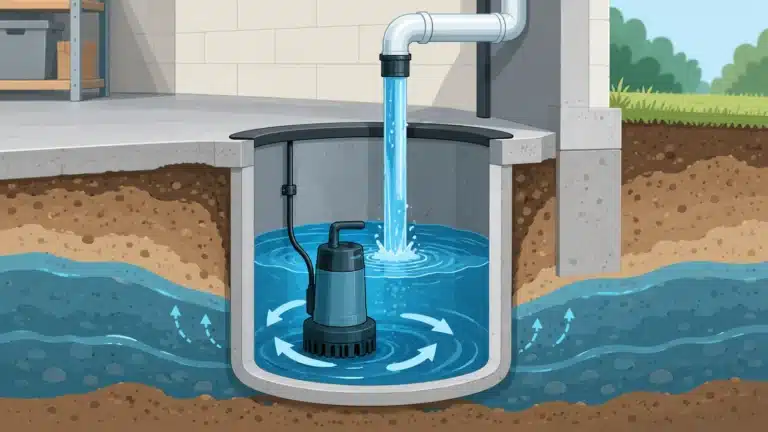
When the pump stops, all the water in the discharge pipe above it would otherwise flow back down into the pit. The pump would then have to pump the same water again, running more often and wearing out sooner. Zoeller’s installation manual states plainly: “A check valve must be installed in the discharge pipe.” Ann Arbor’s guide to sump pump failures explains that a failed check valve means less water removed per cycle and more frequent cycles.
Where the check valve goes and which way it faces
- Direction: Zoeller says the “arrow on valve should point away from pump”; Pentair says to make sure it points up toward the discharge, not at the pump. A valve installed backward blocks the pump completely.
- Height: manufacturers differ, so follow your pump’s manual. Spears, a valve maker, says 12 to 18 inches above the pump discharge or as the pump maker recommends. Boshart gives from about 8 inches above the pump discharge up to roughly 12 inches above the floor. Zoeller’s consumer guide says a few inches above the pump discharge, inside the pit.
- Horizontal runs: some valves can be installed horizontally; Spears says to follow the “This Side Up” marking when they are.
- Inside or above the pit: Boshart notes that a valve above the pit is easier to service, while one inside the pit can be quieter.
Signs of a bad sump pump check valve
| What you notice | What it means |
|---|---|
| Pump turns on much more often than it used to, even in dry weather | Valve leaking or stuck open; water drains back after each cycle |
| Water level rises again right after the pump stops; you hear water rushing back | Valve not closing |
| Pump runs or hums but the pit does not empty | Valve stuck closed or installed backward (also check for air lock) |
| Loud bang or thud just after the pump stops | Valve slamming shut (see noise) |
| Water leaking from the valve or its rubber couplings | Loose clamps, cracked valve body or worn seal |
Liberty Pumps’ manuals list a pump that runs periodically when nothing is draining as a sign of a check valve that is “missing, stuck open, or leaking.” Short cycling also has other causes; see sump pump running constantly.
Quick test: watch the pit after the pump shuts off. A little settling is normal, but if the water level climbs back up noticeably within a minute with no rain coming in, the valve is letting water back.
The weep hole (anti-airlock hole)
Many installations have a small hole drilled in the discharge pipe between the pump and the check valve. Its job is to let trapped air escape so the pump does not air-lock and run without moving water; Boshart describes it as a way “to expel air that can get trapped in the sump pump housing.” It is not there to stop water hammer.
- Size and position vary: Zoeller specifies a 3/16-inch hole level with the top of the pump; Pentair says 1/16 to 1/8 inch, just above the pump discharge and below the check valve. Some pumps, such as Liberty’s, already have a bleed hole built into the base.
- A small spray of water from it while the pump runs is normal, according to Zoeller, which also recommends cleaning the hole about every three months so it does not clog.
Check valve banging or slamming
Pentair lists “check valve slams shut causing a bang just after pump shuts off” as a common complaint. The falling column of water snaps the flap shut. Fixes:
- Replace a standard swing valve with a quiet (spring-loaded) check valve. Spears describes its design as using a “spring controlled rate of closing to prevent slamming,” and Liberty sells quiet-closing valves for the same reason.
- Pentair suggests adding a section of flexible rubber hose in the discharge line to absorb the shock.
- Make sure the discharge pipe is strapped firmly so it cannot knock against joists or walls.
For other noises from the pit, see sump pump making noise.
Types and sizes
- Swing (flapper) check valve: simple and inexpensive; the most likely to bang.
- Quiet or spring-loaded check valve: closes before the water reverses, so much quieter.
- Clear check valves: let you see whether the flapper is moving.
- Connections: slip or rubber-coupling valves with hose clamps are easiest to replace; solvent-weld and threaded valves are permanent.
- Size: match the pump’s discharge, most often 1-1/4 or 1-1/2 inch for household pumps; 2-inch and larger are used with bigger pumps.
Liberty also recommends a ball valve after the check valve on some installations so the pump can be removed without draining the discharge line.
Replacing a sump pump check valve
- Unplug the pump.
- Put a bucket and towels under the valve: the water in the pipe above it will drain out when you loosen it.
- Loosen the hose clamps (or cut the pipe for a glued valve) and remove the old valve.
- Fit the new valve with the arrow pointing away from the pump, tighten the clamps, and check the weep hole below it is clear.
- Plug the pump in and run a bucket of water through to check for leaks and that the pump empties the pit.
Glued (solvent-weld) installations, or pipes inside a sealed radon lid, are best left to a plumber.
Use your pump’s manual and a plumber for glued or sealed systems. Suggest a guide or report a correction.
What a check valve replacement costs
A plastic check valve is usually inexpensive at a hardware store. Installed by a plumber, HomeAdvisor (updated June 17, 2026) lists a valve replacement at $125 to $250, and Fixr gives about $125 to $200.
Frequently asked questions
Do I need a check valve on my sump pump?
Yes. Manufacturers such as Zoeller require one in the discharge pipe. Without it, water falls back into the pit and the pump runs far more often.
How do you know if a sump pump check valve is bad?
The pump turns on more often than it used to, the water level rises again right after the pump stops, or you hear water running back into the pit. A pump that runs but does not empty the pit can mean the valve is stuck closed or backward.
Which way does a sump pump check valve go?
With the arrow on the valve pointing away from the pump, in the direction the water flows: up and out toward the discharge.
How high above the pump should the check valve be?
Follow your pump’s manual. Manufacturers’ advice ranges from a few inches to about 12 to 18 inches above the pump discharge.
What is the difference between a backflow valve and a check valve?
For a sump pump they are often used to mean the same thing: a one-way valve that stops water flowing back. “Backflow preventer” in plumbing usually refers to devices on drinking water lines, which are different and regulated by code.
How often should a sump pump check valve be replaced?
There is no fixed interval from manufacturers. Replace it when it leaks, bangs badly, or lets water back into the pit, and check it whenever you test or replace the pump.
Related: Sump pump not working · Sump pump running constantly · Sump pump making noise
Sources: Zoeller 1073/1075 sump pump manual · Zoeller at Home: check valves · Pentair: troubleshooting FAQ · Spears quiet check valve instructions · Boshart: sump pump check valves · Boshart: weep holes · Liberty Pumps: check valves · Liberty HT450 manual · City of Ann Arbor: common causes of sump pump failure · HomeAdvisor: sump pump repair cost · Fixr: sump pump repair cost.
Updated October 22, 2026. Written and edited by Jordan Hale. General educational guidance; follow your pump’s manual.