Water Heater Pressure Relief Valve Leaking? Causes and Fixes
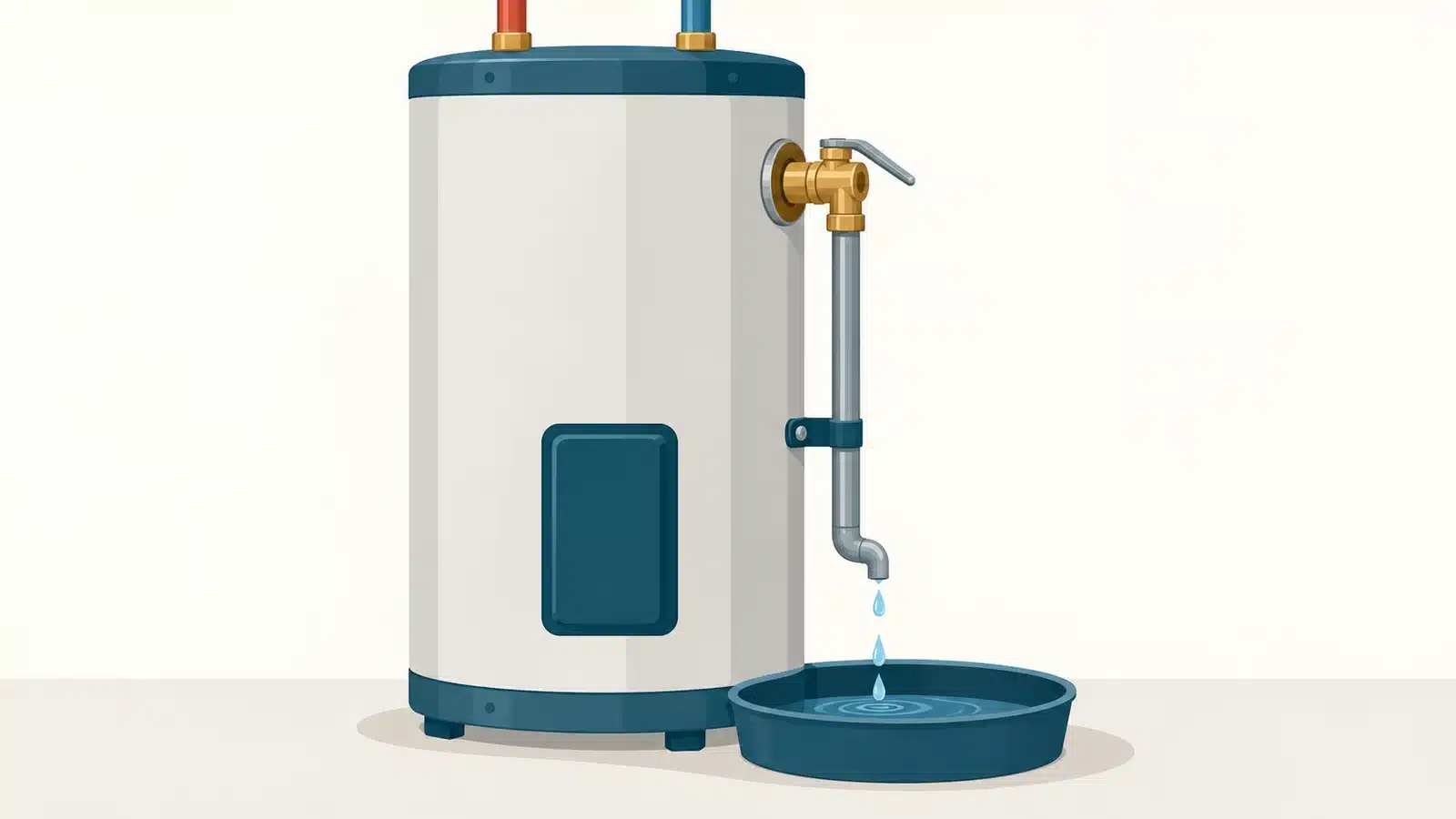
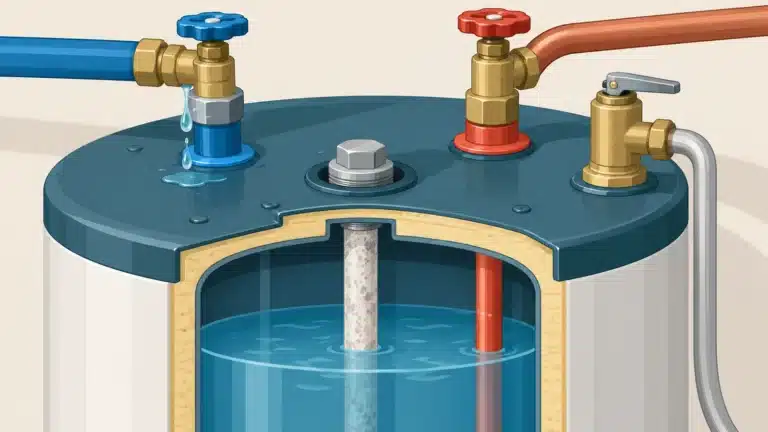
Quick answer: A water heater relief valve leaking (the T&P or pressure relief valve) is most often caused by water pressure that is too high, thermal expansion in a closed plumbing system without a working expansion tank, or a worn valve with grit on its seat. The valve on a tank heater is a temperature and pressure (T&P) relief valve that opens at about 150 psi or 210°F, so a steady drip means one of those limits is being reached or the valve is not sealing. Check your water pressure first. If hot water or steam is pouring out, turn the heater off and call a plumber. Never cap or plug the valve or its pipe.
Two valves, one abbreviation: “PRV” can mean the pressure relief valve on the water heater (this page) or the pressure-reducing valve on your main water line that lowers street pressure. A faulty reducing valve is one of the common reasons the relief valve drips.
In this guide
Is a leaking relief valve dangerous?
The valve is a safety device doing its job: it lets water out so the tank does not exceed its pressure or temperature limits. The leak itself is a warning, not usually an emergency, but how it leaks matters:
- A few drops after the heater runs: usually thermal expansion or high pressure. Fix within days.
- A constant drip or trickle: pressure too high or a worn valve. Have it checked soon.
- Hot water or steam pouring out: the water may be overheating. A. O. Smith says discharge caused by temperature has one cause: a malfunctioning thermostat. Turn the heater off (breaker, or gas control to Off) and call a plumber.
Watts, a major valve maker, warns that if lifting the test lever produces no water at all, you should call a plumber immediately: a valve that cannot open cannot protect the tank.
Match what you see to the cause
| What you see | Most likely cause | Next step |
|---|---|---|
| Drips after each heating cycle, then stops | Thermal expansion in a closed system | Expansion tank |
| Drips or trickles most of the time | Water pressure too high, or a worn valve | Check pressure, then the valve |
| Started dripping after a flush or after testing the lever | Grit on the valve seat; valve not reseating | Worn valve |
| Hot water or steam pouring out | Overheating | Turn the heater off and call a plumber |
| A brand-new heater drips | Thermal expansion or high pressure, often a new check valve or meter | Expansion and pressure |
| Water at the threads where the valve enters the tank | A leaking fitting, or a failed tank opening | Plumber; see below |
1. Water pressure is too high
A. O. Smith’s guide says most codes allow a maximum incoming water pressure of 80 psi and recommends 50 to 60 psi; it says drips from the relief valve mean the pressure is too high, a thermal expansion tank is needed, or both.
- Screw an inexpensive water pressure gauge onto an outdoor hose bib or the drain valve, with all taps closed.
- Read it in the morning and evening. A gauge with a second “maximum” needle shows pressure spikes overnight, which a single reading can miss.
- Above 80 psi, have a plumber adjust or replace the pressure-reducing valve on the main line, or install one if there is none. If an expansion tank is fitted, its air charge must be reset to match the new house pressure.
2. Thermal expansion with no working expansion tank
Water expands as it heats. In a “closed” system, where a check valve, backflow preventer or some water meters stop water flowing back into the main, that extra volume has nowhere to go, so pressure climbs until the relief valve opens. A. O. Smith’s technical bulletin puts it bluntly: “Do not depend on the T&P valve to handle thermal expansion!” Rheem notes that thermal expansion typically shows as about a cup of water per 10 gallons of tank capacity with each heating cycle.
- No expansion tank: a plumber installs a small thermal expansion tank on the cold line. Many codes require one in closed systems.
- An expansion tank that has failed: water coming out of the air valve on top of the expansion tank means its diaphragm has failed and it needs replacing; see expansion tank leaking.
- Wrong air charge: Watts says the tank’s pre-charge must be set to the system water pressure, and adjusted only with the water system at zero pressure. Some tanks cannot be adjusted at all.
3. A worn valve or grit on the seat
Minerals and sediment can lodge under the valve seat, and springs and seals wear. A valve that drips at normal pressure and temperature, or keeps dripping after its lever has been lifted, needs replacing.
- Testing: Watts says the lever should be operated at least once a year and the valve inspected at least every three years. When you lift it, put a bucket under the discharge pipe, stand clear and wear closed shoes: the water is hot. If it will not stop running after the lever snaps back, close the cold water valve to the heater and call a plumber.
- Replacement: A. O. Smith says to have a qualified person replace the T&P valve. The new valve must have the right pressure and temperature rating for the heater; A. O. Smith notes its rating should be the same as or less than the heater’s certified working pressure.
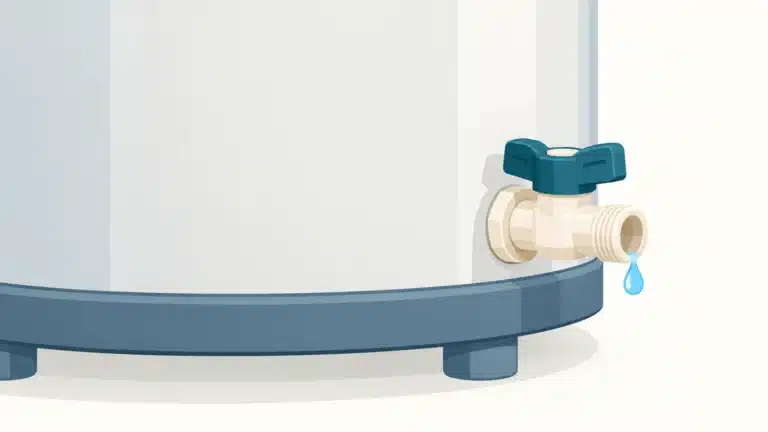
- Leak at the tank threads: a leak where the valve screws into the tank can be the valve’s threads, which a plumber can reseal. If the tank’s welded fitting (spud) itself is leaking, A. O. Smith says spuds “are not repairable” and the heater should be replaced.
4. Water temperature too high
The valve’s temperature element opens at about 210°F, far above any normal setting, so turning the thermostat down from 140°F to 120°F rarely stops a drip by itself. If the water at the taps is scalding, the relief pipe discharges hot water, or the heater runs constantly, the thermostat or gas control may have failed. Turn the heater off and call a technician. For everyday use the U.S. Department of Energy says most households only need 120°F.
Overflow pipe dripping: what the timing tells you
The overflow pipe on a water heater is the relief valve’s discharge pipe, so a dripping overflow pipe means the relief valve is letting water out. When it drips is the most useful clue. Note the timing for a day before calling anyone, and do not open the valve to test it.
| What you notice | What to record | What to ask about |
|---|---|---|
| Drips after hot water has been used | Approximate timing relative to reheating | Thermal expansion control and incoming pressure |
| Drips continually | Whether it continues between heating cycles | Pressure, valve condition, and correct installation |
| Started after plumbing work | What changed and when | New check valves, pressure controls, or expansion-tank setup |
| Water around the valve body | Outlet versus threaded connection or tank surface | Exact leak location before selecting a repair |
| Flow becomes forceful, steaming, or very hot | Keep clear; do not approach to measure it | Urgent professional assessment and safe shutdown |
A drip that appears only while the heater is reheating usually points to thermal expansion. A drip that continues between heating cycles points more to high incoming pressure or a worn valve. Timing is a clue, not a final diagnosis, so use the sections above to confirm the cause. Never cap, plug or shorten the overflow pipe.
The discharge pipe: what it should look like
The pipe from the relief valve carries hot water safely down to the floor or a drain. Model plumbing codes (as summarized by the International Code Council) require that it:
- is no smaller than the valve outlet;
- has no valves or tees, and no threads at the open end;
- is not trapped, so it drains by gravity;
- ends no more than 6 inches above the floor or a drain receptor, where discharge can be seen and will not scald anyone.
Never cap, plug or shorten it. If the pipe itself is dripping at a joint rather than the valve, see water heater overflow pipe dripping; for where it should run, water heater overflow pipe.
Tankless water heater relief valve leaking
Tankless heaters have a pressure relief valve too, fitted on the hot water outlet line near the unit. Rinnai’s manual says its heaters do not require a combination temperature and pressure (T&P) valve, although local codes may, and that the relief valve is usually supplied by the installer rather than included with the heater. Water dripping from its discharge pipe means the valve is opening.
- High incoming water pressure is the most common cause, just as with a tank heater. Check it as in cause 1 above.
- Thermal expansion in a closed system can push pressure up after the heater runs, even though a tankless heater holds little water. An expansion tank may be needed; see cause 2.
- A worn or scaled valve may not reseal. Do not lift its test lever to check it on a tankless unit; the water can scald and the valve may not reseat. Have a plumber test and replace it.
For other leak points on a tankless heater, see tankless water heater leaking.
Use your heater’s manual, and a licensed plumber for valve replacement, pressure-reducing valves and expansion tanks. Suggest a guide or report a correction.
What a repair usually costs
| Repair | Typical cost | Source |
|---|---|---|
| Pressure relief valve replacement | $20 to $200 | HomeAdvisor (June 2026) |
| Relief valve replaced by a plumber | Up to about $200 | Angi (Aug 2026) |
| Thermal expansion tank | $100 to $400 | Angi (Aug 2026) |
A pressure-reducing valve on the main line is a separate job; ask for an itemized quote that includes resetting the expansion tank to the new pressure.
Frequently asked questions
Is it normal for a water heater pressure relief valve to leak?
No. The valve is meant to stay closed and open only when pressure or temperature gets too high, so a steady drip means either the pressure is too high, the water is too hot, or the valve itself is worn. Check the pressure and temperature first (causes 1 to 3) before replacing the valve.
How do I know if my water heater pressure relief valve is bad?
If it keeps dripping when your water pressure and temperature are normal, or it will not reseat after the test lever is operated, the valve is faulty and should be replaced. Corrosion or mineral crust on the valve body is another sign. See cause 3 above.
Why is my water heater relief valve dripping after flushing?
Grit stirred up during the flush, or opening the valve to let air in, can leave debris on its seat so it does not close fully. Have it checked; a valve that will not reseat needs replacing.
Can I cap or plug a leaking relief valve?
Never. Capping the valve or its pipe removes the tank’s protection against excess pressure and temperature, which can make it fail violently. Fix the cause instead.
Why is my new water heater relief valve dripping?
Usually thermal expansion or high water pressure, especially if a check valve, backflow preventer or new meter has made the system closed. A new heater can also show it simply because the old valve had stopped working. Check the pressure and whether an expansion tank is needed.
Why is my tankless water heater relief valve leaking?
Usually high incoming water pressure or thermal expansion in a closed system, the same as on a tank heater. A plumber can measure your water pressure and fit a pressure-reducing valve or expansion tank if needed. A valve that keeps dripping at normal pressure needs replacing.
Related: Water heater overflow pipe · Expansion tank leaking · Boiler relief valve leaking
Sources: Watts LF100XL T&P valve specification · Watts relief valve installation tag · A. O. Smith water heater use and care guide · A. O. Smith bulletin 45 (thermal expansion) · A. O. Smith bulletin 52 (relief valves) · Rheem: thermal expansion bulletin · Watts expansion tank instructions · ICC CodeNotes: water heater safety · U.S. DOE: water heating · Rinnai installation and operation manual · HomeAdvisor: water heater repair cost · Angi: water heater repair cost.
Updated October 28, 2026. Written and edited by Jordan Hale. General educational guidance; follow your heater’s manual and local code.