Water Heater Pilot Light Keeps Going Out? 7 Causes and Fixes
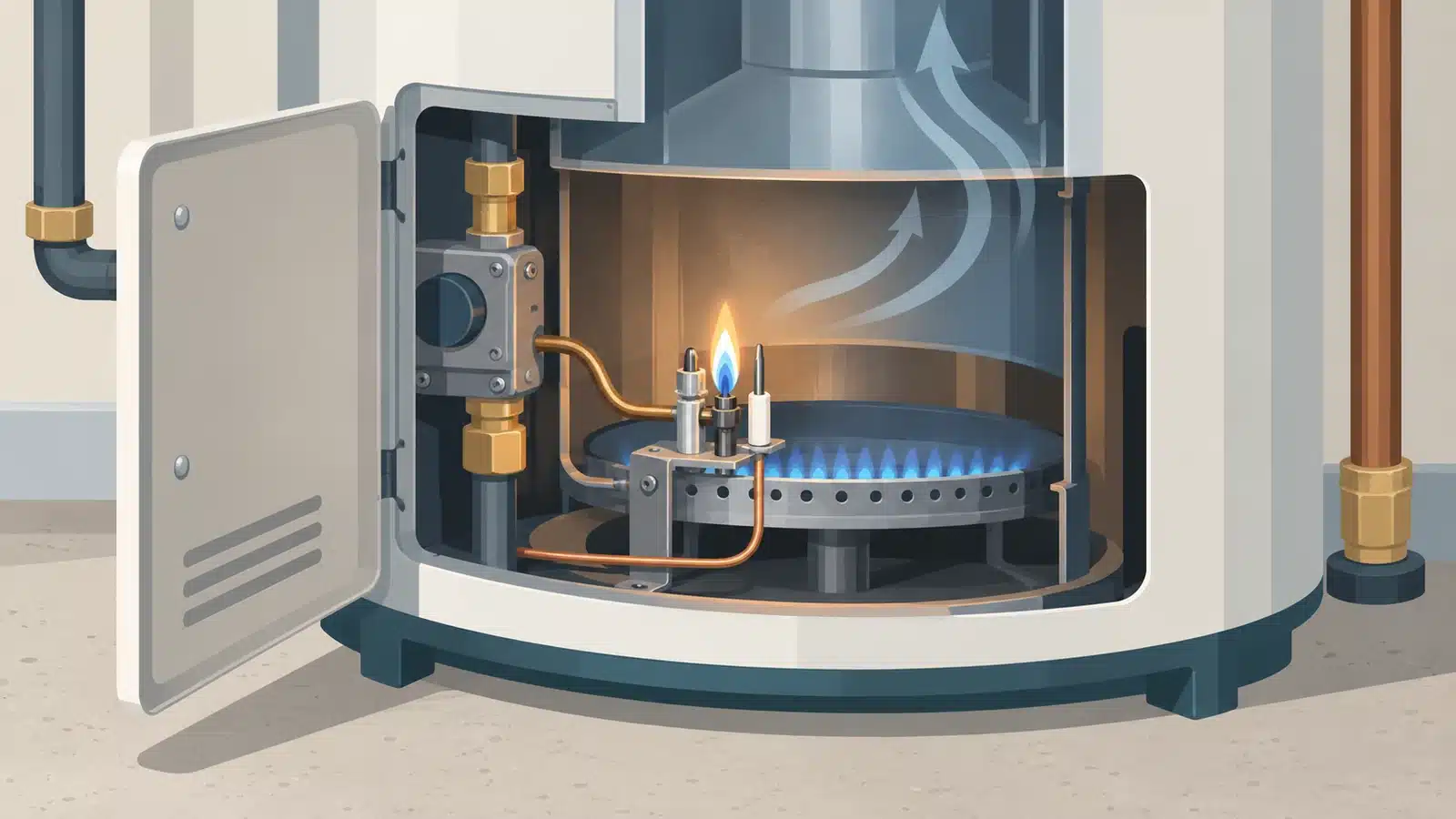
Quick answer: A water heater pilot light keeps going out when its flame sensor (a thermocouple or thermopile) stops sensing a strong enough flame, so the gas control shuts the gas off. The usual causes are a worn or out-of-place sensor, a dirty pilot giving a weak flame, a draft, or, on most heaters built since 2003, a dust-clogged air intake screen. If the pilot goes out again after one relight by the label’s instructions, stop and call a technician. HomeAdvisor puts a professional thermocouple replacement at about $150.
Smell gas? Do not relight anything. Leave the house, then call your gas utility or 911 from outside. See water heater gas leak. If a carbon monoxide alarm sounds, leave and call 911.
In this guide
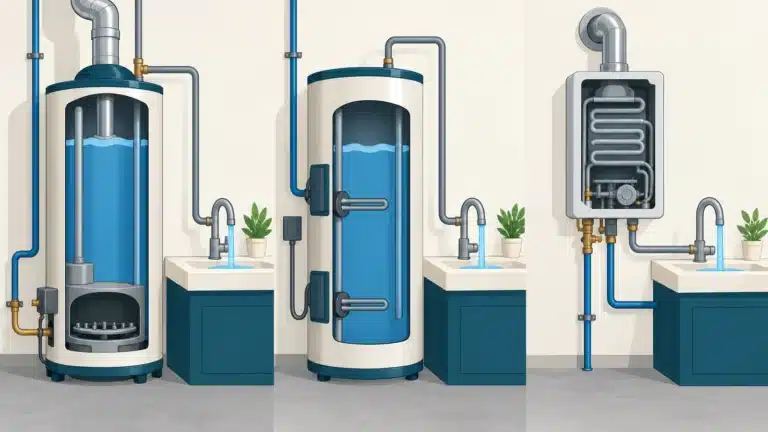
First, which kind of heater do you have?
- Standing pilot, open front: older heaters with a removable burner cover and a pilot you light with a match or igniter.
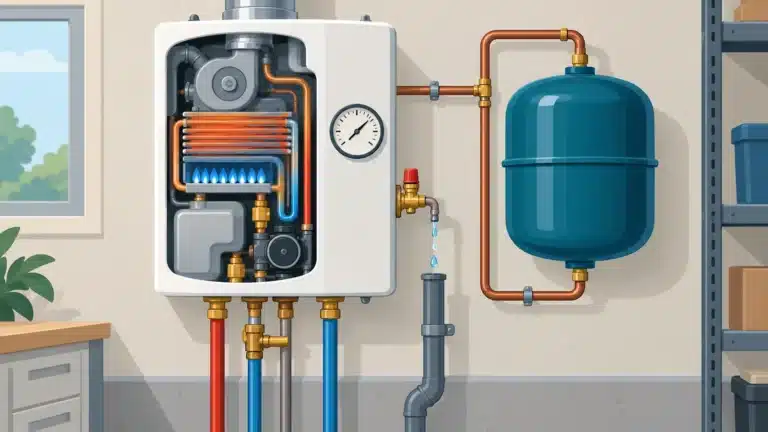
- Standing pilot, sealed chamber: most 30 to 50 gallon gas heaters made since July 2003. The U.S. Consumer Product Safety Commission notes that a safety standard (ANSI Z21.10.1a) took effect for these sizes on July 1, 2003, using a flame arrestor that traps and burns flammable vapors inside the heater so they do not ignite in the room. These have a sight glass instead of an open burner door, a push-button igniter and, often, a status light. Do not open the sealed chamber.
- Electronic ignition or power vent: no standing pilot. These show error codes or light patterns instead; follow the manual’s fault chart.
When it goes out tells you why
| What happens | Most likely cause |
|---|---|
| Lights, but goes out as soon as you let go of the button | Thermocouple or thermopile not making enough signal, or the pilot assembly (cause 3) |
| Stays lit for minutes or hours, then goes out | Not enough air (clogged intake screen), a weak or dirty pilot, or a draft (causes 1, 2, 4) |
| Goes out on windy days or when a fan, dryer or furnace runs | Draft or a venting problem (cause 1) |
| Will not light at all | Gas supply off, empty propane tank, or a failed igniter or gas control (cause 6) |
| Heater is locked out and will not relight | Flammable vapor sensor or thermal switch has tripped (causes 5 and 7) |
7 reasons a water heater pilot light keeps going out
1. A draft blows the flame out
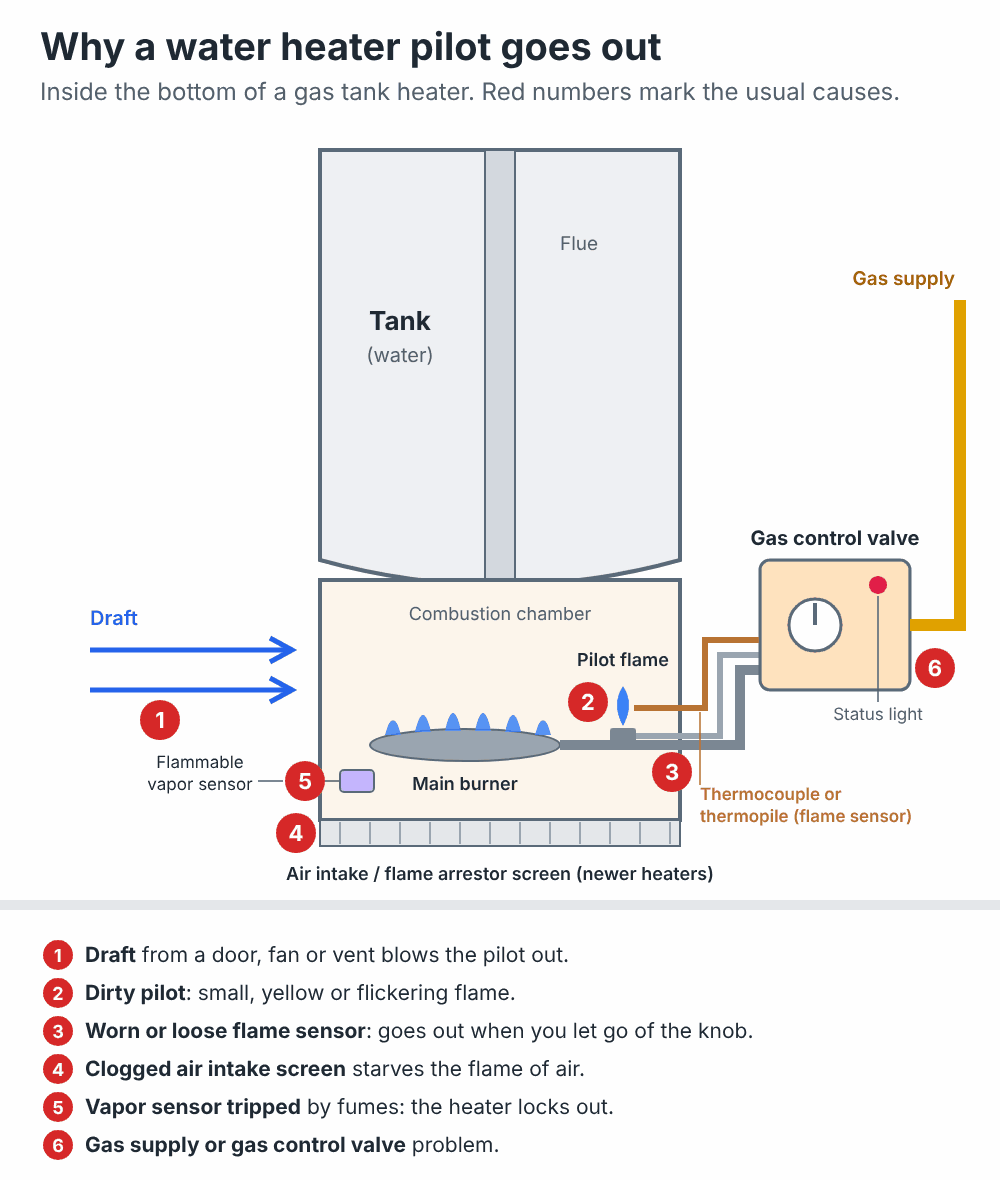
Air moving past the heater from an open door, window, fan or a nearby furnace or dryer can blow out a small pilot flame, especially on older open-front heaters. Clear clutter from around the heater, stop the draft, and keep vents and the air openings at the base clear. If outages line up with wind or with another appliance running, ask a technician to check the venting and the heater’s air supply.
2. A dirty pilot gives a weak flame
Dust, rust flakes or spider webs in the pilot tube or orifice make the flame small, yellow or flickering, so it no longer heats the sensor properly. A healthy pilot flame is steady and mostly blue and wraps around the tip of the sensor. Cleaning the pilot orifice is service work; do not poke it with wire, which can enlarge or damage it.
3. A worn or out-of-place thermocouple or thermopile
This is the classic cause when the pilot goes out the moment you release the button. Heaters use one of two sensors:
- Thermocouple: a single copper lead from the pilot to the gas control. Bradford White’s service manual gives 20 to 30 millivolts as good output on an open-circuit test, and says its connection should be finger tight plus a quarter turn.
- Thermopile: a stronger sensor used with Honeywell (Resideo) style controls, common on sealed-chamber heaters. Bradford White’s service manual lists normal output as 350 to 850 millivolts.
For heaters with a Honeywell-style control, Bradford White’s service manual says that if the pilot will not stay lit, the pilot assembly is replaced, and if the problem continues, the gas control. So a cheap thermocouple is not the fix for every heater. A technician tests the sensor’s output with a meter before replacing parts; sanding or bending the sensor is not a repair.
4. A clogged air intake or flame arrestor screen
Sealed-chamber heaters draw combustion air through a screen at the base. A. O. Smith says that “frequent pilot outages or a tripped thermal switch often means” the heater is not getting enough air, and that the flame arrestor “can become clogged with dust or lint.” Laundry rooms and garages are the usual culprits.
- Vacuum the openings and the outside air filter at the base of the heater regularly.
- For deeper cleaning, follow your manual exactly. A. O. Smith’s steps have you turn the control to Pilot, let the chamber cool, and clean through the base openings with a soft plastic brush and a vacuum.
- Keep lint, laundry and stored boxes away from the base.
5. The flammable vapor sensor has tripped
Many sealed-chamber heaters have a sensor that shuts the heater down if it detects vapors from gasoline, paint, solvents or cleaners stored nearby. Rheem’s manual says to contact a qualified service technician after a sensor shutdown and not to tamper with the sensor. Bradford White’s guidance after a flammable vapor incident is to replace the water heater. Store fuels and solvents well away from any gas appliance.
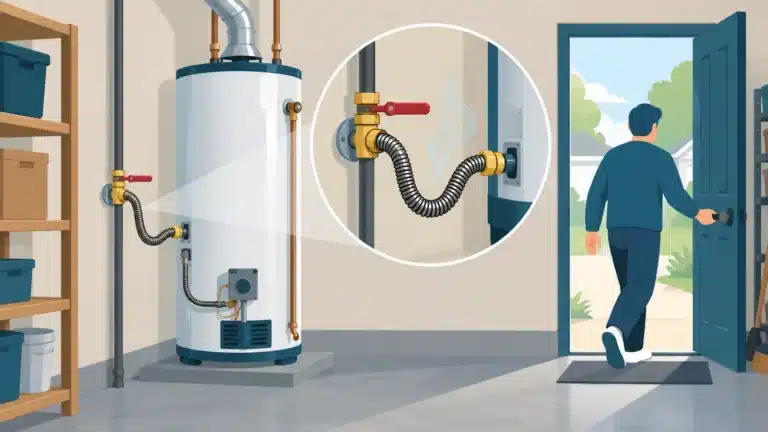
6. A gas supply or gas control valve problem
If the pilot will not light at all, or other gas appliances also act up, the supply may be off, low or interrupted: a closed valve, an empty propane tank, or a utility issue. A failing gas control valve can also starve the pilot. Gas pressure checks and valve replacement are for your gas utility or a licensed technician.
7. The thermal switch tripped (overheating)
Some heaters have a thermal switch that shuts the gas off when it senses flames or heat where they should not be, often from a lack of combustion air or a venting problem. A. O. Smith shows a small reset button on the switch, but Bradford White’s manuals say to find out why the switch opened before the heater goes back in service. Reset it once at most; if it trips again, call a technician.
What the status light means
Heaters with a Honeywell or Resideo style gas control have a small status light. A. O. Smith’s support pages for its heaters describe these patterns:
| Light | Meaning on A. O. Smith controls |
|---|---|
| No light | Usually the pilot is out; A. O. Smith’s troubleshooting then has you check the thermal switch (cause 7) |
| 1 flash every 3 seconds | Pilot lit and the gas control working normally |
| 2 flashes | Pilot lit, but the control is not getting enough millivolts from the thermopile |
| 4 flashes | Water too hot: an overheat shutdown |
| 7 flashes | The gas control valve has failed |
Codes and timing differ between brands, and even between A. O. Smith’s own pages (one says the normal flash is once per second), so match the pattern to the chart on your heater’s label. For more on codes, see water heater not heating.
Relighting safely
- Make sure there is no gas smell. If there is, stop and leave.
- Follow the lighting instructions printed on the label on your heater, step by step. Manufacturers differ: A. O. Smith says to wait at least 10 minutes after turning the gas off, and Rheem’s manual says 5 minutes, to let any gas clear.
- Hold the pilot button for the time the label gives after the pilot lights, then release it and watch through the sight glass.
- Turn the control to the temperature setting only once the pilot stays lit.
- If it goes out again, do not keep trying. Note when it goes out (see the table above) and call a technician.
Is it dangerous if the pilot keeps going out?
A pilot that goes out is the safety system working: the gas control shuts off the gas when it no longer senses a flame. The danger signs are different: a gas smell, a carbon monoxide alarm, soot or scorch marks around the burner door, or a lazy yellow flame. A. O. Smith warns that poor airflow can produce unburned fuel and carbon monoxide. If you notice any of these, turn the control off if it is safe to reach, leave, and call for help. Have a working carbon monoxide alarm near the heater and outside sleeping areas.
Use your heater’s label and manual, and a licensed technician for gas repairs. Suggest a guide or report a correction.
What a fix usually costs
HomeAdvisor’s water heater repair guide (updated June 17, 2026) gives these typical professional prices:
| Repair | Typical cost |
|---|---|
| Service call to assess and relight the pilot | $50 to $150 |
| Thermocouple replacement | About $150 |
| Gas control valve replacement | About $350 |
A pilot assembly or thermopile on a sealed-chamber heater is usually priced between these, so ask for an itemized quote. If the heater is old, has a leaking tank or needs a gas control and pilot assembly together, compare the quote with replacing the heater.
Frequently asked questions
How do I know if my thermocouple is bad?
The classic sign is a pilot that lights while you hold the button but goes out as soon as you let go, even with a strong blue flame. A technician confirms it by measuring its millivolt output; Bradford White lists 20 to 30 millivolts for a good thermocouple.
Can I replace a thermocouple myself?
On older open-front heaters, some homeowners do, but it is gas work and some areas require a licensed professional. On sealed-chamber heaters the thermocouple or thermopile is part of a pilot assembly inside the sealed chamber, which should be replaced by a technician.
How long should I hold the pilot button?
As long as your heater’s label says after the pilot lights, often around a minute. A. O. Smith’s relighting guide says to press the igniter repeatedly for up to 90 seconds. Holding it longer will not fix a failed sensor.
Why does my pilot light go out when it is windy?
Wind can push air back down the vent or across the burner and blow out the pilot. If outages line up with windy weather, have the vent cap, vent connector and draft checked.
Is it safe to keep relighting the pilot?
One relight by the label’s instructions is fine if there is no gas smell. Repeated relighting does not fix the cause, and a heater that keeps shutting down may have an air supply or venting problem. Call a technician.
Why won’t my pilot light at all?
Check that the gas valve to the heater is open and, on propane, that the tank is not empty. If other gas appliances work, the igniter, pilot assembly or gas control may have failed. A heater locked out by the flammable vapor sensor will not relight until it is serviced.
How do I stop my water heater pilot light from going out?
Keep the area around the heater clear of drafts, clutter and lint, vacuum the air intake openings at the base regularly, and store paint, gasoline and solvents well away from it. An annual service, where a technician checks the pilot, sensor and venting, catches most problems before the pilot starts going out.
Related: Water heater not heating · Water heater gas leak · Water heater making noise
Sources: A. O. Smith: cleaning the air filter and flame arrestor · A. O. Smith: status light flashes · A. O. Smith: how to light a pilot light · Bradford White Defender service manual · Bradford White installation and operating manual · Rheem use and care manual · CPSC: flammable vapor ignition resistant heaters · HomeAdvisor: water heater repair cost. Model-specific instructions take priority.
Updated October 22, 2026. Written and edited by Jordan Hale. General educational guidance; follow your exact model instructions.