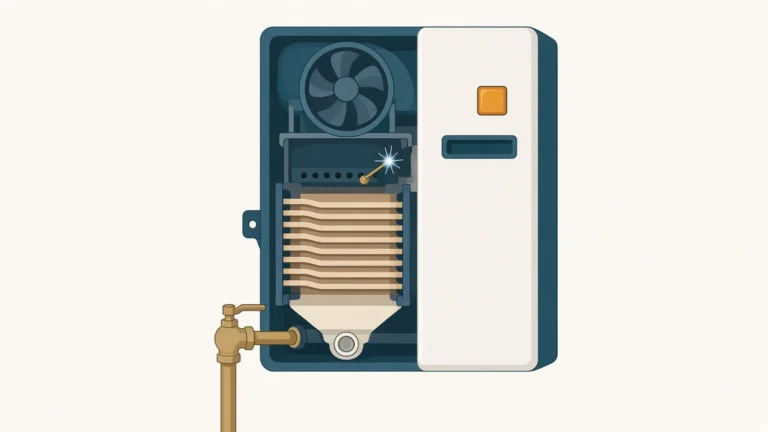
Tankless Water Heater Leaking? 6 Causes and Fixes
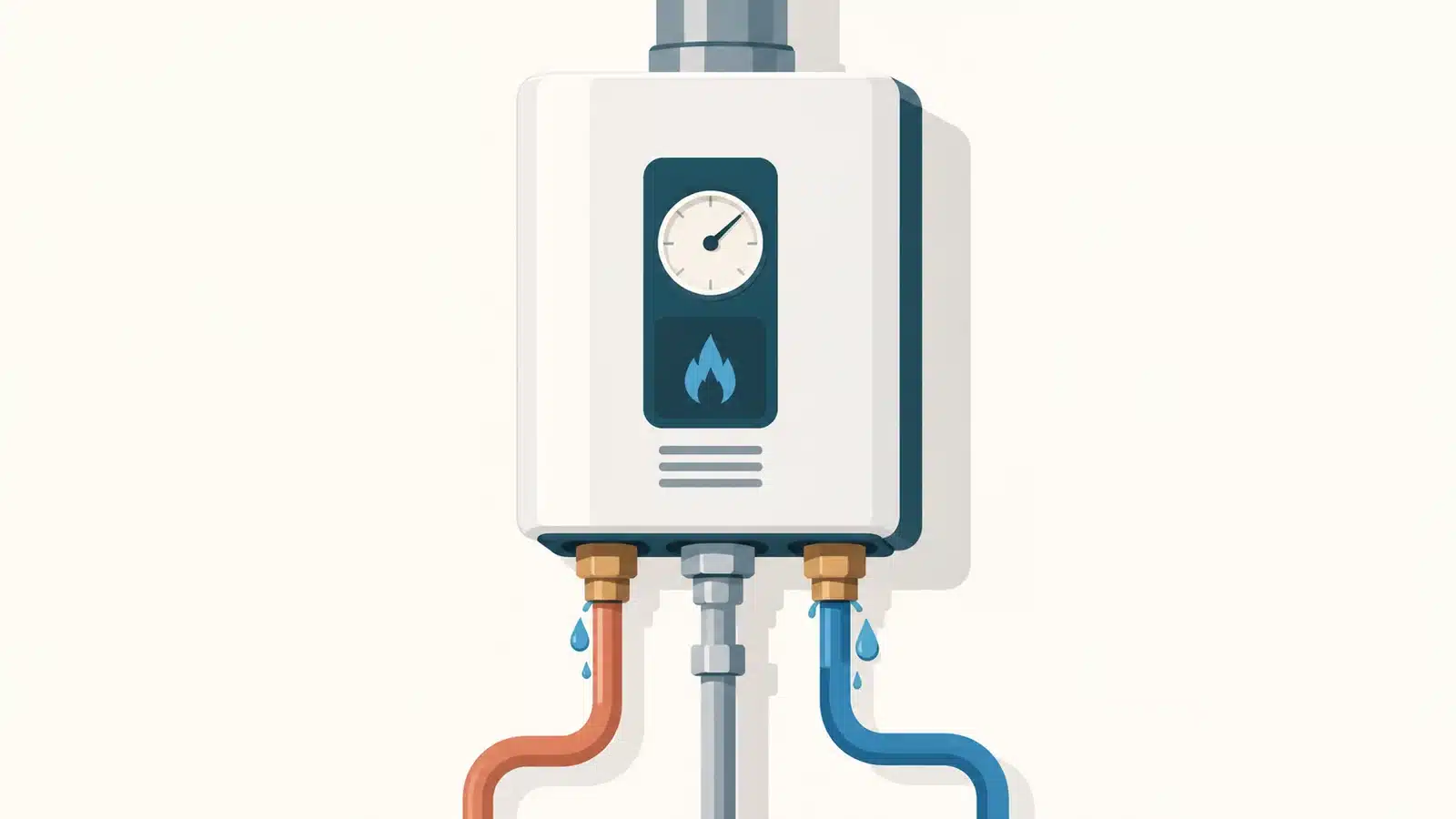
Quick answer: A tankless water heater leaking usually comes from one of six places: the water connections under the unit, the pressure relief valve, corroded fittings, condensate (on condensing models), rain getting in through the vent, or a leak inside the unit such as a failed heat exchanger. Turn the unit off, close the cold water valve, then find where the water first appears. Leaks at outside connections are often simple fixes; water coming from inside the cabinet needs a licensed technician.
In this guide
Leaking right now? Stop it first
- Turn the unit off with its power button, then switch off its breaker or unplug it.
- On a gas model, close the gas valve to the heater. If you smell gas, leave and call your gas utility or 911 from outside; see water heater gas leak.
- Close the cold water isolation valve under the unit.
- Keep water away from the electrical connection and the power cord.
- Let the unit cool before touching any fittings; the water inside can be hot enough to scald.
Where is it leaking from?
Dry the unit, the pipes and the floor, then watch for the first wet spot. Where the water starts points to the cause.
| Where you see water | Likely cause | Who fixes it |
|---|---|---|
| At a pipe joint or isolation valve under the unit | Loose connection or worn valve seal (cause 1) | Often DIY for a snug-up; plumber if it keeps weeping |
| From the end of the relief valve’s discharge pipe | Pressure relief valve opening (cause 2) | Plumber: check water pressure and thermal expansion |
| Green or white crust on a fitting | Corroded fitting (cause 3) | Plumber |
| From the condensate drain or trap, on a condensing model | Blocked or loose condensate line (cause 4) | Often DIY; see the condensate trap guide |
| Dripping from the bottom after rain | Water coming in through the exhaust vent (cause 5) | Installer or plumber |
| From inside the cabinet or the bottom of the casing | Internal leak or heat exchanger (cause 6) | Licensed technician |
1. Loose connections or worn isolation valves
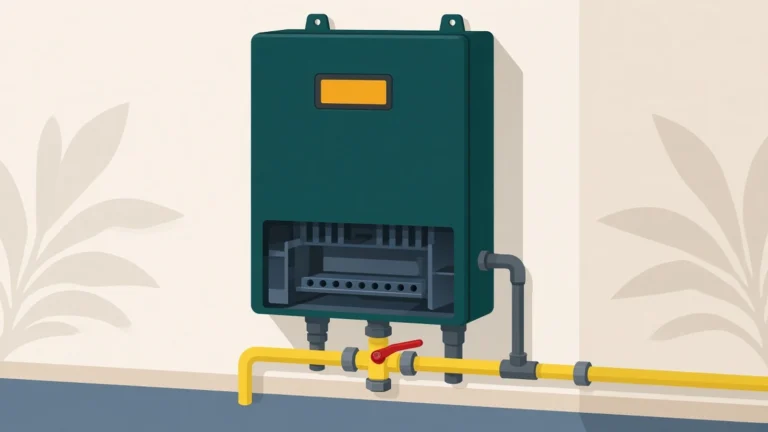
The cold inlet, hot outlet and gas connections sit under the unit, usually with service (isolation) valves. Heat cycling and vibration can loosen a joint, and the valve stems and caps have seals that wear. This is the most common and easiest leak.
- With the unit off and the water valve closed, dry the area and find the exact drip.
- A slightly loose water fitting can be snugged gently with a wrench. Do not overtighten.
- If a valve stem or cap still weeps, or a fitting leaks after a snug-up, have a plumber replace the valve or remake the joint.
- Never work on the gas connection; that is a job for a licensed gas fitter.
2. The pressure relief valve is releasing water
Tankless heaters use a pressure relief valve on the hot water outlet line, near the unit. Rinnai’s manual says its heaters do not require a combination temperature and pressure (T&P) valve, although local codes may require one, and that the valve is often supplied by the installer rather than included. Water from the end of its discharge pipe means the valve is opening.
- Repeated drips usually point to high incoming water pressure or thermal expansion in a closed system, not a bad valve. A plumber can check your pressure with a gauge and may fit a pressure-reducing valve or expansion tank.
- Do not lift the valve’s test lever to “check” it; the water can scald and the valve may not reseal.
- Never cap or plug the discharge pipe.
For how the discharge pipe should be routed, see water heater overflow pipe.
3. Corroded inlet or outlet fittings
Brass and copper fittings at the water ports can corrode, especially with hard or acidic water. Look for green corrosion, white crust or pitting around the leak. Surface crust can be cleaned off to check what is underneath, but a cracked or pitted fitting has to be replaced, and a plumber should also find out why it corroded.
4. Condensate leaks on condensing models
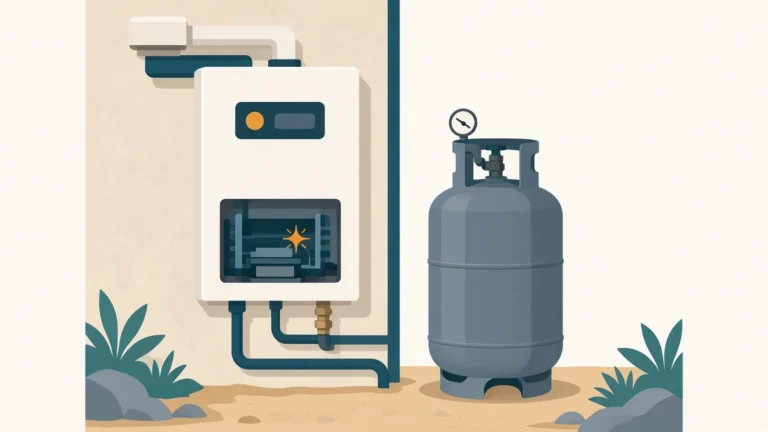
High-efficiency condensing units make acidic condensate that drains through a trap and hose. A blocked trap, a loose cap or a kinked or disconnected hose can leave water under the unit. Non-condensing units do not make this water. If you have a Navien or another condensing model, see our condensate trap leaking guide.
Condensation on cold pipes is different. The cold water inlet pipe can sweat in a humid room. Wrap the pipes in dry paper towels and check after an hour of normal use: beads along a cold pipe are sweat, while a wet trail from one joint is a leak. Pipe insulation stops sweating.
5. Rain getting in through the vent
Noritz names rain water entering through the exhaust vent as one of the two usual causes of dripping from a tankless heater (the other is an internal leak). If the drip shows up after rain or snow, ask the installer to check the vent termination, its slope and its rain cap against the manual.
6. An internal leak or failed heat exchanger
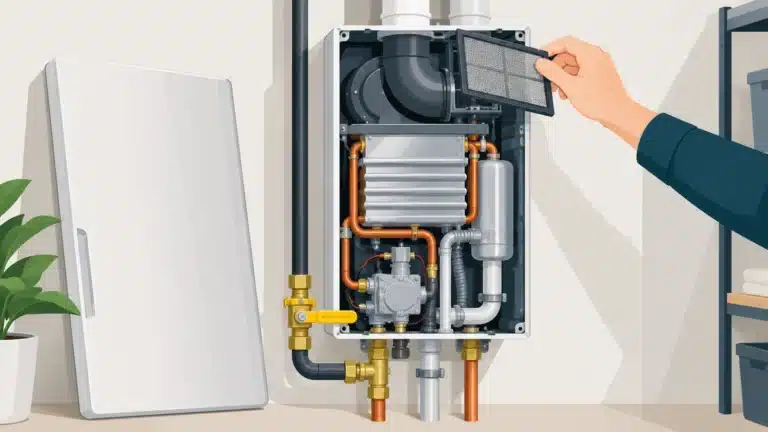
Water from inside the cabinet, from the bottom of the casing, or with an error code usually means an internal seal or the heat exchanger has failed. Scale buildup and freezing are common causes. Do not open the cabinet on a gas unit; have a licensed technician diagnose it. A failed heat exchanger is often the most expensive repair, so ask for a written quote and compare it with replacement.
Freezing: both Rinnai and Navien state that freeze damage is not covered by their warranty. If the unit froze, follow the thawing steps in your manual and have it checked for leaks before using it again.
Rinnai tankless water heater leaking?
A Rinnai leaks from the same places as any tankless heater, but a few points from Rinnai’s own manual help narrow it down.
- Relief valve on the hot outlet: Rinnai units are usually fitted with a pressure relief valve supplied by the installer. Drips from its discharge pipe point to high water pressure or thermal expansion (cause 2).
- Service valves after flushing: Rinnai recommends regular flushing through the isolation valves under the unit. A cap or hose connection left loose, or a worn valve seal, can drip afterwards (cause 1).
- Condensate on condensing models: if your Rinnai is a condensing model, its manual will show a condensate drain line. A blocked or loose line leaves water under the unit (cause 4).
- Freeze damage: Rinnai states that freeze damage is not covered by its warranty. A unit left without power in freezing weather, or an outdoor unit in extreme cold, can crack internally and leak from inside the case (cause 6).
Write down the model number from the rating plate and any code on the controller before you call Rinnai support or a technician.
Preventing leaks
- Descale on schedule. Scale buildup can damage the heat exchanger. Follow your manual’s flushing interval, which is usually shorter with hard water. Rinnai has a flushing guide.
- Clean the inlet water filter (a small screen at the cold inlet on many units) as the manual describes.
- Keep water pressure in range. High pressure strains the relief valve and fittings.
- Protect against freezing. Keep power on in cold weather so freeze protection works, and drain the unit if it will be unpowered in freezing temperatures.
Use your heater’s manual or a licensed technician for an active repair. Suggest a guide or report a correction.
What a repair usually costs
Snugging a connection costs nothing; replacing a valve, fitting or relief valve is a routine plumber’s visit; and a heat exchanger replacement can approach the price of a new unit. For typical prices and questions to ask, see our water heater leak repair cost guide.
Frequently asked questions
Is a leaking tankless water heater dangerous?
It can be. Water near the electrical connection or the gas line is a hazard. Turn the unit off, close the gas and water valves, and call a technician if water is coming from inside the unit or near the gas connection.
Why is water dripping from the pressure relief valve pipe?
The valve is releasing pressure. Repeated dripping usually means high incoming water pressure or thermal expansion, so have a plumber check the pressure before replacing the valve.
Why is my tankless water heater leaking from the bottom?
Check the connections and valves underneath first, then the condensate line on condensing models. Dripping from the bottom after rain points to the vent. Water from inside the casing usually means an internal leak.
How often should I flush a tankless water heater?
Follow your manual. Intervals depend on the model and how hard your water is, and hard water needs more frequent flushing.
Can a tankless water heater leak after flushing?
Yes. A service valve cap or hose connection that was not fully tightened, or a worn valve seal, can drip after flushing. Close the valves, check each cap and connection, and have a plumber replace a valve that keeps weeping.
Why is my Rinnai tankless water heater leaking?
Check the isolation valves and connections under the unit first, especially after a flush, then the relief valve’s discharge pipe and, on condensing models, the condensate line. Water from inside the case often means freeze damage or an internal leak, which needs a technician.
Sources: Rinnai Value Series installation and operation manual · Noritz: dripping water · Navien: frozen tankless water heater. Model-specific instructions take priority.
Updated October 22, 2026. Written and edited by Jordan Hale. General educational guidance; follow your exact model instructions.