Water in Crawl Space? Causes, First Steps and Fix Costs
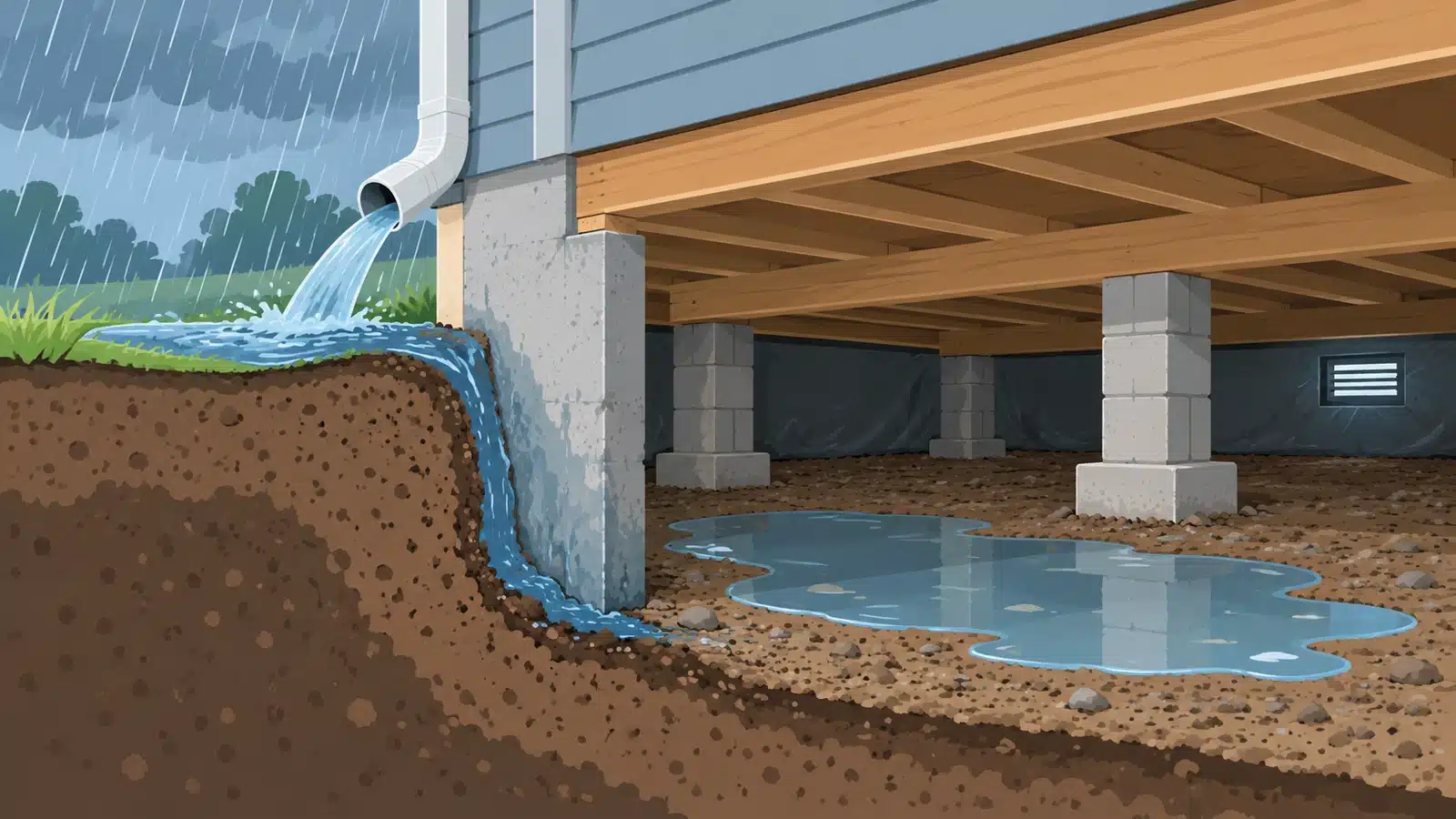
Quick answer: Water in crawl space soil or on the vapor barrier is rarely a call-911 emergency, but it does need prompt action. If the water could be touching wiring, outlets or appliances, stay out. Next, rule out a plumbing leak, get standing water out and dried within a day or two, then fix the source. Most crawl space water comes from roof runoff and poor grading. The rest comes from groundwater, a leaking pipe or summer condensation.
In this guide
Is water in a crawl space an emergency?
How urgent it is depends on three things: whether electricity is involved, where the water is coming from, and how long it has been there.
- Electricity: This is the immediate danger. The Energy Education Council’s Safe Electricity program says to never step into a flooded basement or room if water may be in contact with outlets, appliances or cords. Don’t try to turn off the breaker if you’d have to stand in water to reach it. Call your utility to shut off power at the meter instead.
- A live plumbing leak: Clean water that keeps rising, or the sound of running water, points to a supply line leak. Shut off the main water valve now.
- Mold: The EPA says water-damaged areas should be dried within 24–48 hours to prevent mold growth. A crawl space that stays wet for weeks will likely grow it. See our crawl space mold guide.
- Structure: The U.S. Department of Energy notes that humid crawl spaces can lead to structural, mold and pest problems. Wood joists and subfloors that stay damp can rot over time.
Safety first: Never enter a wet crawl space with extension cords or tools plugged in, or if you smell gas or sewage. If water may be touching wiring, the furnace or the water heater, call the utility or an electrician before going in. Water from a sewer or drain leak counts as contaminated. The EPA recommends professional help for cleanup after contaminated water.
How to tell where the water is coming from
Timing is your best clue. Water that shows up after storms is usually surface water. Water that appears in dry weather usually comes from a pipe.
| Likely source | Typical clues | Quick check |
|---|---|---|
| Roof runoff, gutters, grading | Appears during or soon after heavy rain. Wettest under a downspout or a low spot. Dries out between storms. | Walk around the house in the rain. Look for downspouts dumping at the wall and soil sloping toward the house. |
| Supply pipe leak | Water shows up in dry weather. Drip or spray under a pipe run. Higher water bill. | Water meter test (below). |
| Drain or sewer leak | Odor. Wet area under a toilet, tub or kitchen sink. Gets worse when fixtures are used. | Run water upstairs while someone watches below with a flashlight. |
| Groundwater | Water seeps up through the soil floor or at the base of the walls. Lingers for days or weeks in wet seasons. | Water comes back after you pump it out, even without fresh rain. |
| Condensation | Dripping ducts and pipes, damp joists, and water on top of the vapor barrier in summer, with no single entry point. | A hygrometer reads high on humid days. It happens most in vented crawl spaces. |
Water meter test: EPA WaterSense suggests reading your water meter when no water is being used, then reading it again two hours later. If the number changed, you probably have a leak. Also check the water heater if it sits in or above the crawl space. Our guide to a water heater leaking from the top covers that.
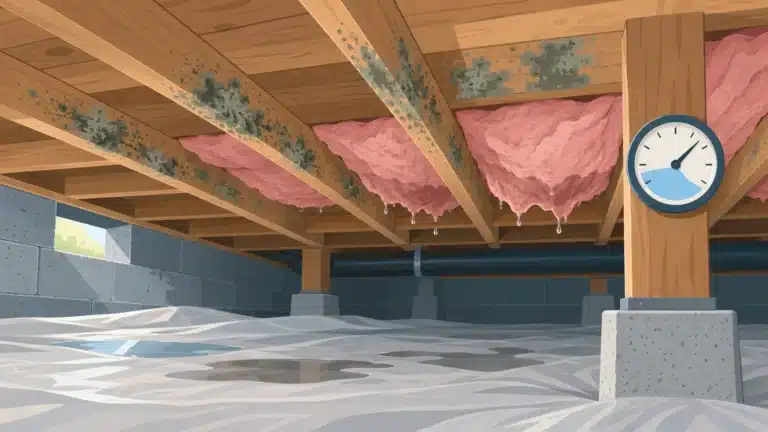
Why vented crawl spaces “sweat”: Summer air cools when it enters a crawl space, and its relative humidity rises as it cools. Building scientist Allison Bailes gives an example of 90°F outdoor air at 53% RH reaching about 70% RH at 80°F. He also recorded an Atlanta crawl space at about 70°F and 92% RH in August. At those levels, cool pipes, ducts and the vapor barrier collect water.
What to do first, in order
- Make it safe. Keep people and pets out until you’re sure no wiring or appliances are in the water.
- Stop any plumbing leak. Close the main shutoff, or the fixture shutoff if you’ve found the leak.
- Take photos of the water, the damage and any wet insulation before cleanup, in case you file an insurance claim.
- Remove standing water. A wet/dry vacuum or utility pump can handle shallow puddles. A large volume, or water from a sewer line, is a job for a water-removal company.
- Dry it out. Use fans and a dehumidifier, aiming to dry everything within 24–48 hours. Remove insulation that is soaked or has fallen. The EPA notes that absorbent or porous materials may have to be thrown away if they become moldy.
- Fix the source, starting outside. Repairing gutters, downspouts and grading is cheap compared with interior drainage. Do those first.
- Monitor. Put a hygrometer in the crawl space and check it after the next heavy rain and through the next humid month.
What humidity should a crawl space be?
No single official number exists for crawl spaces, and sources differ a little:
| Source | Guidance |
|---|---|
| EPA | Keep indoor humidity below 60% RH, ideally 30–50% |
| CDC | Keep home humidity no higher than 50% |
| ENERGY STAR | Optimum is generally 30–50%, or 30–40% in cold climates during heating season |
| Allison Bailes, GreenBuildingAdvisor | Mold growth can take off around 70% RH, and the risk rises the longer RH stays there |
A practical goal is to stay under the EPA’s 60% ceiling most of the time. Long stretches above 70% are a warning sign. A vented crawl space tracks outdoor humidity, so it often can’t hold those levels in a humid summer. In Department of Energy Building America research, unvented crawl spaces cut humidity by over 20%. That’s why sealed crawl spaces paired with a crawl space dehumidifier are common in humid regions.
Common fixes and what they cost
| Fix | Typical cost | Source |
|---|---|---|
| Downspout extension (materials, DIY) | $5–$20 each | HomeGuide (2026) |
| Bury downspouts underground | $150–$350 per downspout. Full underground gutter drainage runs $1,500–$7,000 (average $2,800). | HomeGuide (2026); Angi (2025 data) |
| Regrade soil at the foundation | $500–$1,000 for one side; $1,000–$3,000 for the whole house | HomeGuide (2026) |
| Professional water removal and drying | $1,500–$5,000 (HomeGuide). $400–$5,000 (Angi). $2,000–$10,000 including damage repair (Fixr). | HomeGuide (2026); Angi (2026 data); Fixr (Jan 31, 2025) |
| Sump pump in the crawl space | $500–$1,200 (HomeGuide); $1,500–$4,000 for crawl space or exterior installs (Angi) | HomeGuide; Angi (2026 data) |
| Interior drainage system | $800–$3,000 | HomeGuide (2026) |
| Vapor barrier | $1,200–$4,000, or $2–$4 per sq ft (HomeGuide); $1,500–$4,000 (Fixr) | HomeGuide; Fixr |
| Dehumidifier, installed | $750–$1,700 (Fixr); $1,000–$4,000 (Angi) | Fixr; Angi |
| Full encapsulation | $1,500–$15,000 (This Old House average about $5,500) | This Old House (Mar 13, 2026) |
The sources disagree, especially on sump pumps and water removal, so get local quotes. Here’s what each fix involves:
- Grading: The International Residential Code calls for the ground to drop at least 6 inches within the first 10 feet from the foundation, per InterNACHI’s summary of the 2024 IRC.
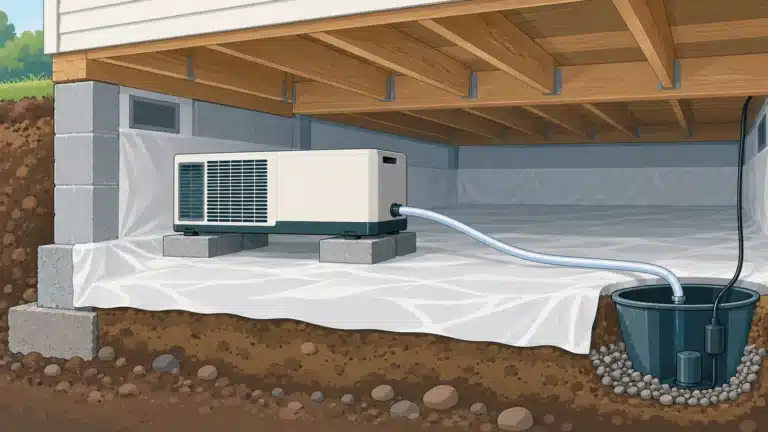
- Gutters and drains: The Building America Solution Center recommends gutters and downspouts that carry rainwater away from the foundation. For persistent groundwater, it adds footing drains to daylight and a sump pit 2–3 feet deep with a gasketed lid. Compare options in our French drain cost guide.
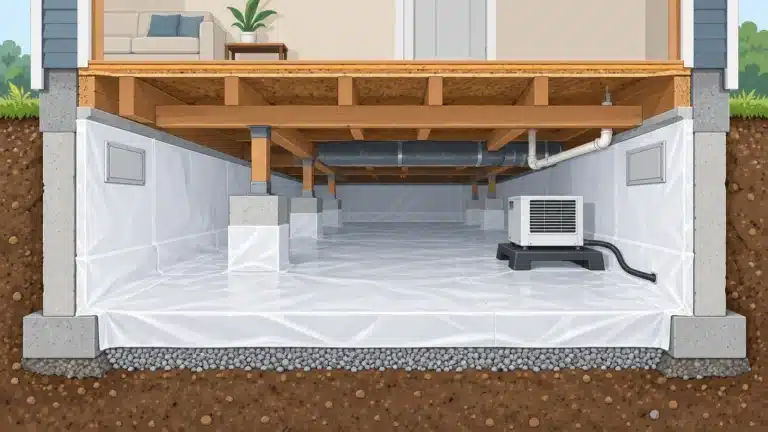
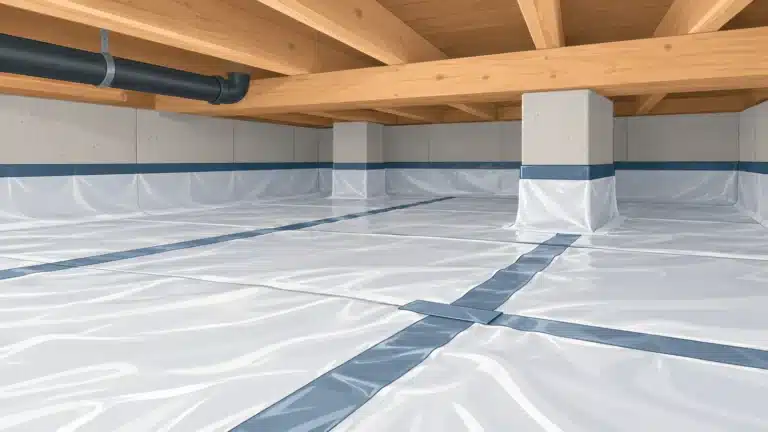
- Vapor barrier: The same guide specifies 6-mil or thicker polyethylene. It should run 8–12 inches up the walls, with seams overlapped 6–12 inches and taped. More in our crawl space vapor barrier guide.
- Dehumidifier or encapsulation: A dehumidifier handles humid air, not liquid water. Stop the water first. See crawl space encapsulation cost.
When to call a pro
- Water is touching wiring, the furnace or the water heater.
- The water came from a sewer or drain line.
- Water keeps coming back after you’ve fixed the gutters and grading.
- Mold covers more than about 10 square feet. That’s the size at which the EPA advises professional help.
- Floors feel soft or bouncy, joists look soft, or you see new cracks in the foundation.
What a good quote should include
- The source they identified and how they confirmed it
- The scope of work: drain length, sump location and where it discharges, vapor barrier thickness and how seams and walls are sealed
- Dehumidifier capacity, where it drains and who handles the electrical work
- Moisture or humidity readings before and after the work
- Warranty terms and what voids them
Is it normal to have some water in a crawl space?
A damp smell or a little dampness after a big storm is common, but standing water isn’t normal. Puddles mean water is getting in faster than the soil can absorb it. Trace the source before it causes mold or wood damage.
Will standing water in a crawl space dry up on its own?
It may soak in eventually, but slow drying is the problem. The EPA says to dry water-damaged areas within 24–48 hours to prevent mold. Pump or vacuum the water out and run fans and a dehumidifier.
Should I put a dehumidifier in a wet crawl space?
Only after you’ve stopped the water. A dehumidifier controls humid air. It can’t keep up with liquid water coming in, and in a vented crawl space it ends up drying outdoor air. Fix drainage first, then decide whether to seal the space.
How do I know if water in my crawl space is from a leak or from rain?
Water that shows up only after rain usually comes from outside. If it appears in dry weather, do the EPA WaterSense meter test. Read the meter with no water running, then again two hours later. Any change suggests a plumbing leak.
Updated October 28, 2026. Written and edited by Jordan Hale. General educational guidance; use a qualified professional for structural, electrical or mold work.