Crawl Space Encapsulation Cost (2026): Prices & Add-Ons
Quick answer: Crawl space encapsulation usually costs about $1,500 to $15,000, and several national guides put the average near $5,500. Per square foot, basic jobs run about $2 to $4 and jobs with real moisture problems run $3 to $10. Where your project lands depends on the size of the space, the liner thickness, and whether you need drainage, a sump pump, a dehumidifier, mold cleanup or foundation repair first.
Cost sources checked October 28, 2026: This Old House (updated Mar 13, 2026), HomeAdvisor (2025 guide), Polyguard (Oct 17, 2024), Angi, New York (May 11, 2026). U.S. dollars. Local prices vary.
In this guide
How much does crawl space encapsulation cost?
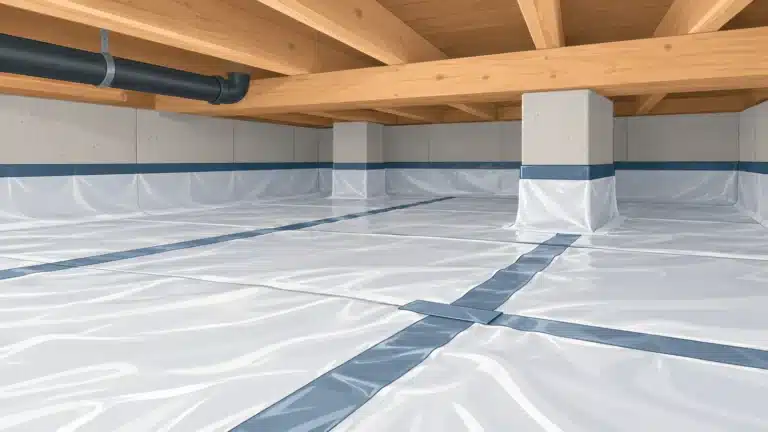
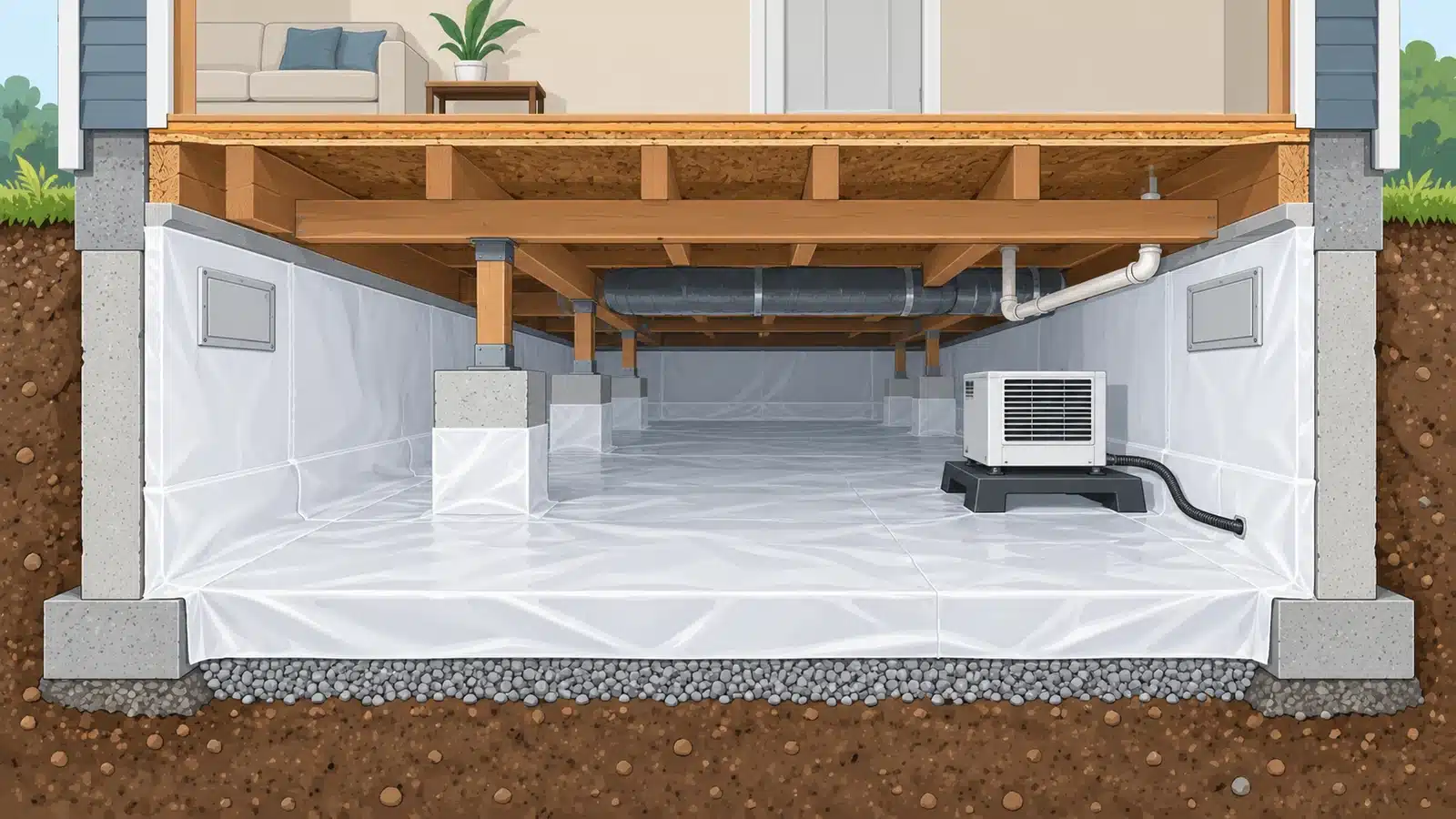
Encapsulation means sealing the crawl space off from outside air and the ground: a heavy plastic liner over the dirt and up the walls, sealed seams, closed vents, and some way to keep the air dry. Because the work ranges from “lay a liner in a dry space” to “dig a drain, add a sump pump, and kill mold first,” quotes vary a lot.
| Source (date shown) | Typical total | Average | Per sq ft |
|---|---|---|---|
| This Old House (Mar 13, 2026) | $1,500–$15,000 | $5,500 | $3–$7; up to $10 with extensive moisture problems |
| HomeAdvisor (2025) | $5,000–$15,000 for most; $1,500–$20,000 overall | $5,500 | $2–$4 basic; $3–$10 extensive |
| Polyguard (Oct 17, 2024) | $1,500–$15,000 | $5,500 | Not stated |
| Delaware DNREC (2022 dollars) | $2,000–$15,000 | Not stated | Not stated |
The sources agree on the broad range but not on the details. Note that three of them repeat the same $5,500 average, so treat it as a rough midpoint, not a precise figure. In a high-cost market the numbers climb: Angi’s New York City estimate (May 2026) averages $6,193, with a range of $1,689 to $22,520.
Labor is the biggest piece. This Old House and HomeAdvisor both put labor at 50% to 70% of the total, with materials making up the rest.
What’s included in the price?
A full encapsulation quote usually bundles several parts. Here is what each one tends to cost when it is priced on its own.
| Component | Typical cost | Source |
|---|---|---|
| Liner/vapor barrier, light plastic | $0.05–$0.20 per sq ft | This Old House |
| Liner, heavy 20-mil | $0.40–$0.60 per sq ft (This Old House); $0.50–$0.70 (HomeAdvisor) | This Old House, HomeAdvisor |
| Seam tape | $18–$50 per roll | This Old House |
| Vent sealing | $10–$22 per vent (materials); $40–$50 per cover installed | This Old House, HomeAdvisor |
| Sealed access door | $60–$150 | This Old House |
| Dehumidifier, installed with wiring | $800–$2,000 | This Old House |
| Wall insulation | Rigid foam $2.50–$3.00 per sq ft; spray foam $1.00–$3.50 per sq ft | This Old House |
| Permits and inspection | $100–$250 | This Old House |
Liner thickness is usually measured in mils (thousandths of an inch). Building code sets a lower minimum than most encapsulation contractors use. See our crawl space vapor barrier guide for thickness and code details.
Add-ons that raise the price
- Drainage or sump pump: $600–$1,800 for a French drain or sump system (This Old House). Compare our sump pump cost guide.
- Mold removal: $500–$4,000 (This Old House). Polyguard quotes $15–$30 per square foot of affected area.
- Foundation repair: $2,000–$7,000 for a moderate problem (This Old House), and HomeAdvisor lists $1,500–$15,000 depending on extent. See foundation crack repair cost.
- Pest treatment: from about $200 for a small problem up to $4,000 for termite treatment and repair (This Old House).
- Asbestos removal: $1,800–$2,800 if old duct or pipe wrap has to come out first (This Old House).
Cost by crawl space size
The figures below multiply HomeAdvisor’s per-square-foot rates by floor area. Treat them as a quick estimate, not a quote. Liner also covers the walls, so jobs with tall walls or many piers use more material than floor area alone suggests.
| Crawl space floor area | Basic ($2–$4/sq ft) | Extensive ($3–$10/sq ft) |
|---|---|---|
| 500 sq ft | $1,000–$2,000 | $1,500–$5,000 |
| 1,000 sq ft | $2,000–$4,000 | $3,000–$10,000 |
| 1,500 sq ft | $3,000–$6,000 | $4,500–$15,000 |
| 2,000 sq ft | $4,000–$8,000 | $6,000–$20,000 |
| 2,500 sq ft | $5,000–$10,000 | $7,500–$25,000 |
For comparison, This Old House estimates $3,000 to $7,000 for a 1,000-square-foot crawl space.
Encapsulation vs. vapor barrier only
A vapor barrier alone is plastic laid over the dirt floor, usually lapped a short way up the walls. The vents stay open and the crawl space is still treated as outdoor space. Encapsulation goes further: it seals the vents, covers the walls, closes air leaks, and dries the air.
| Vapor barrier only | Full encapsulation | |
|---|---|---|
| Typical installed cost | $2–$4 per sq ft (HomeServe, citing HomeGuide, Dec 2024); $1,200–$4,000 total (Delaware DNREC, 2022) | $1,500–$15,000; about $5,500 average (sources above) |
| Vents | Stay open | Sealed |
| Walls | Liner extends partway up | Lined, and often insulated |
| Air drying | None | Dehumidifier, conditioned air, or exhaust fan |
In a dry crawl space where you just need a ground cover, a vapor barrier alone may be enough. In humid climates the open vents are often the problem. Building Science Corporation’s Joseph Lstiburek (March 2020) argues a crawl space should be fully inside the house or fully outside it, “not in between.”
Is crawl space encapsulation worth it?
It can be, if you have a moisture problem to solve. DOE’s Building America program reports that unvented, conditioned crawl spaces use 15% to 18% less energy for heating and cooling and reduce humidity by over 20%. In a North Carolina study of 12 houses summarized by Energy Vanguard, the encapsulated crawl spaces stayed below 60% relative humidity all summer, while the vented ones tracked outdoor humidity.
It is more likely worth it if you see:
- Musty smells upstairs, damp insulation, or sagging batts.
- Condensation on ducts or pipes in summer.
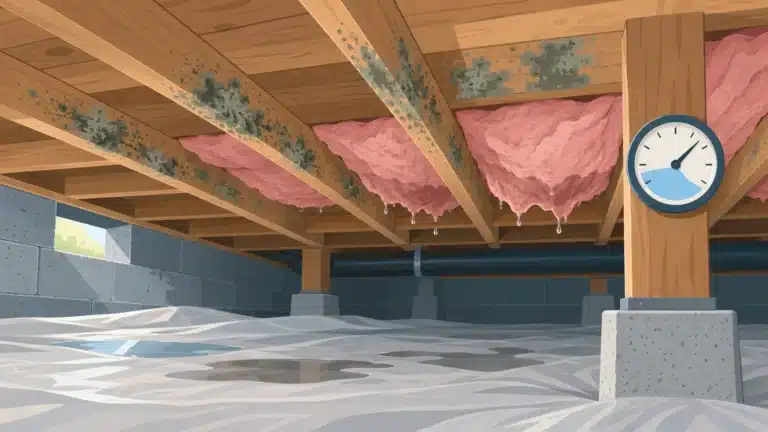
- Mold on joists (see crawl space mold).
- Recurring water in the crawl space after rain, once drainage is fixed.
It is less urgent in a crawl space that is already dry, in a dry climate, with no odor or wood damage. A plain ground cover may be all you need there.
On lifespan, Bob Vila (updated July 2022) estimates about 15 to 20 years for a quality job. The dehumidifier and any sump pump will need service or replacement on their own schedule.
What a good quote should include
Get at least two or three written quotes and compare them line by line. A complete quote should spell out:
- Square footage of floor and wall being lined.
- Liner thickness in mils, whether it is reinforced, and how far up the wall it goes.
- How seams are overlapped and sealed, and how the liner is fastened to walls and piers.
- Which vents and openings get sealed, and what happens to the access door.
- The drying method: dehumidifier (model, capacity, and where it drains), conditioned air, or exhaust fan.
- Any drainage, sump pump, mold, pest or foundation work, priced separately.
- Wall or rim-joist insulation type and thickness, and whether foam meets fire code if left exposed.
- Permits, debris removal, warranty terms, and what voids the warranty.
Be cautious of a quote that skips the water source. Energy Vanguard’s encapsulation method says water problems should be fixed first, usually starting with outside drainage. It also says gas or oil appliances that draw combustion air from the crawl space should be replaced with sealed-combustion or electric models before the vents are closed.
DIY vs. hiring a pro
Materials are the cheaper part. On October 28, 2026, a 12-by-75-foot roll of 20-mil liner (900 sq ft) was listed at $337 before shipping, about $0.37 per square foot. The savings from DIY come mostly from skipping labor. The tradeoffs are cramped, dirty work, no installer warranty, and code details to get right. A dry, roomy crawl space with no mold is a reasonable DIY candidate. Standing water, mold, low clearance, or a structural concern points to a pro. Our step-by-step encapsulation guide walks through the DIY process.
Safety first: Crawl spaces can hold mold, pests, sharp debris, old insulation that may contain asbestos, and live wiring. Don’t disturb suspect pipe or duct wrap. Wear gloves, eye protection and a properly fitted N-95 respirator, as EPA advises for mold cleanup. Have someone nearby while you work.
How much does it cost to encapsulate a 1,000 sq ft crawl space?
This Old House estimates $3,000 to $7,000. At HomeAdvisor’s per-square-foot rates, a basic job is roughly $2,000 to $4,000 and an extensive one $3,000 to $10,000. Drainage, mold or foundation repairs add to that.
Does an encapsulated crawl space need a dehumidifier?
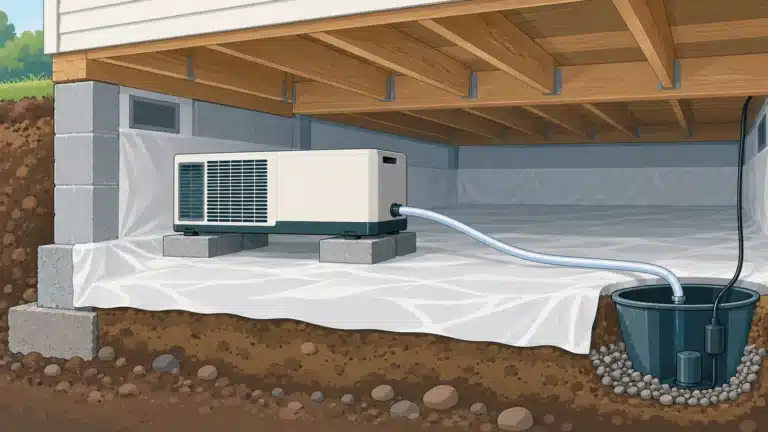
It needs some way to remove moisture. Recent code language, as summarized by Larimer County, Colorado, lists a continuously running exhaust fan, a conditioned air supply, or dehumidification as options. A dehumidifier is the most common choice in retrofits. See our crawl space dehumidifier guide.
Is encapsulation the same as a vapor barrier?
No. A vapor barrier is the plastic ground cover. Encapsulation includes that liner but also seals the vents and walls and dries the air, which is why it costs several times more.
How long does crawl space encapsulation last?
Bob Vila estimates about 15 to 20 years for a quality installation. The liner can last longer if it isn’t torn. Mechanical parts like dehumidifiers and sump pumps wear out sooner and need periodic checks.
Updated October 28, 2026. Written and edited by Jordan Hale. General educational guidance; use a qualified professional for structural, electrical or mold work.