Well Pump Replacement Cost (2026): By Type, Depth & Parts
Quick answer: Most U.S. homeowners pay about $1,000 to $2,800 to replace a well pump, installed. HomeAdvisor’s 2026 data puts the average at $1,897. A shallow-well jet pump usually costs less ($400 to $1,000). A deep submersible pump costs more, and wells deeper than 200 feet often run $2,000 to $5,500 or more. Replacing the pressure tank at the same time adds roughly $500 to $1,500.
Cost sources checked October 28, 2026: HomeAdvisor (updated June 17, 2026), HomeGuide (2025), Forbes Home (2025) and This Old House (March 2026). U.S. dollars. Local prices vary with depth, access and region.
In this guide
How much does well pump replacement cost?
National cost guides land in a tight band. HomeAdvisor reports an average of $1,897, with most projects between $973 and $2,822 and a full span of about $200 to $5,800. HomeGuide puts the average at $1,800 (typically $1,000 to $2,500), and Forbes Home at $1,750 ($1,000 to $2,750). Treat these as planning numbers, not a quote. The two things that move your price most are the type of pump and how deep it sits.
Cost by pump type
| Pump type | Typical installed cost | Where it is used |
|---|---|---|
| Shallow-well jet pump | $400 to $1,000 | Wells up to about 25 ft; pump sits above ground |
| Deep or convertible jet pump | $500 to $1,400 | Wells to roughly 90 to 110 ft; pump above ground |
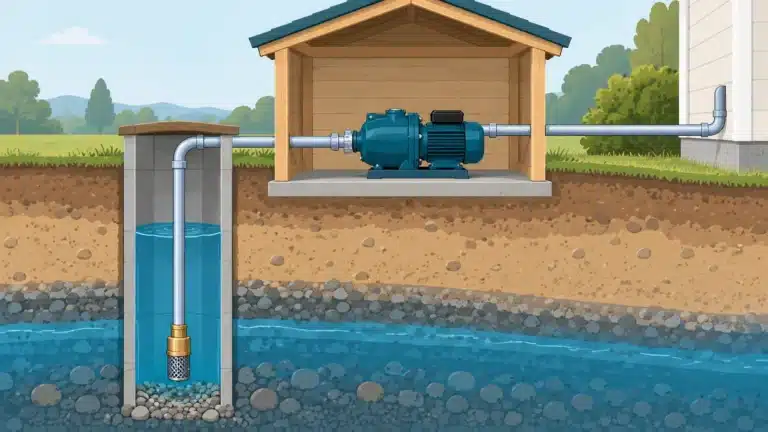
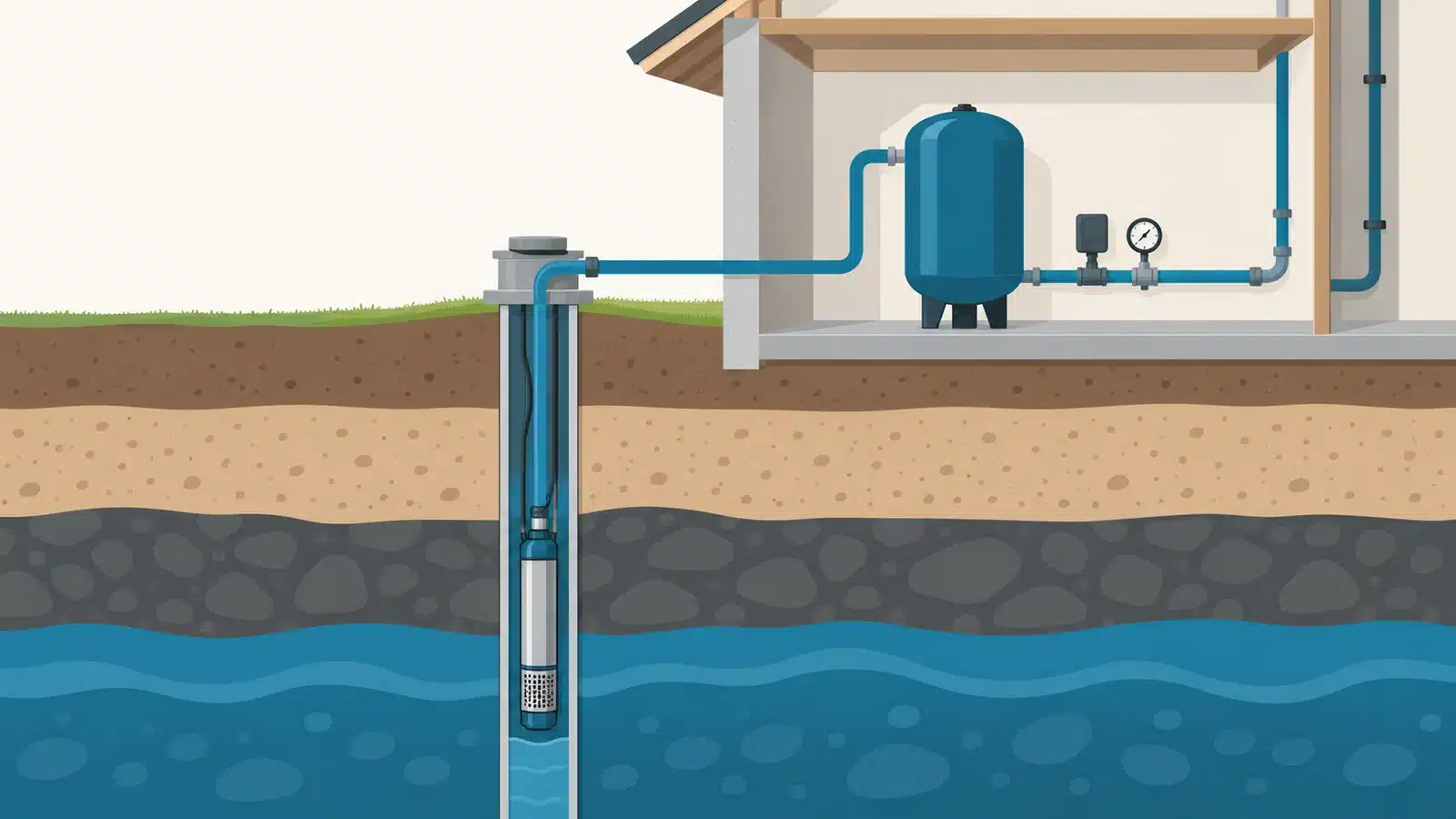
| Submersible pump | $1,000 to $2,500 | Most drilled wells; pump sits down in the well |
| Constant-pressure (variable-speed) pump | $2,000 to $5,000 | Steady pressure with several fixtures running |
| Solar well pump | $1,500 to $6,500 | Off-grid homes, livestock and remote wells |
| Hand pump | $150 to $2,000 | Backup water during power outages |
Ranges from HomeGuide and HomeAdvisor; constant-pressure range also matches Forbes Home and Bob Vila.
Pump-only prices are much lower than installed prices. This Old House cites retail prices starting around $200 for a shallow jet pump, $300 for a deep jet pump and $500 for a submersible. Most of an installed quote is labor, pulling and resetting the pump, wiring, pipe and testing.
Cost by well depth
Deeper wells need a stronger pump, more drop pipe and wire, and more labor and equipment to pull the old pump out. Well-industry cost guides give these planning ranges for a submersible replacement:
| Pump depth | Typical installed cost |
|---|---|
| Under 25 ft | $800 to $1,800 |
| 25 to 100 ft | $1,200 to $2,500 |
| 100 to 200 ft | $1,500 to $3,500 |
| 200 to 400 ft | $2,000 to $5,500 |
| Over 400 ft | $4,000 to $8,000 or more |
Estimates from The Well Guide and FixUpFirst (2025 to 2026). The national data sites above do not break costs down by depth.
If you don’t know your pump depth, your well completion report (from the driller or your state well records) usually lists the well depth and sometimes the pump setting.
Parts and extras that change the quote
| Item | Typical cost |
|---|---|
| Labor | $45 to $150 per hour |
| Pressure switch, installed | $100 to $300 |
| Control box (some submersibles) | $200 to $500 |
| Start capacitor | $100 to $200 |
| Check valve | $100 to $350 |
| Drop pipe and pump wire | About $1 to $3 per foot each |
| Emergency, night or weekend service | 25% to 100% on top of normal rates |
| Permit, where required | $50 to $200 |
Compiled from HomeAdvisor, Bob Vila, The Well Guide and DrillerDB. Ranges vary widely by region.
Replacing the pump and pressure tank together
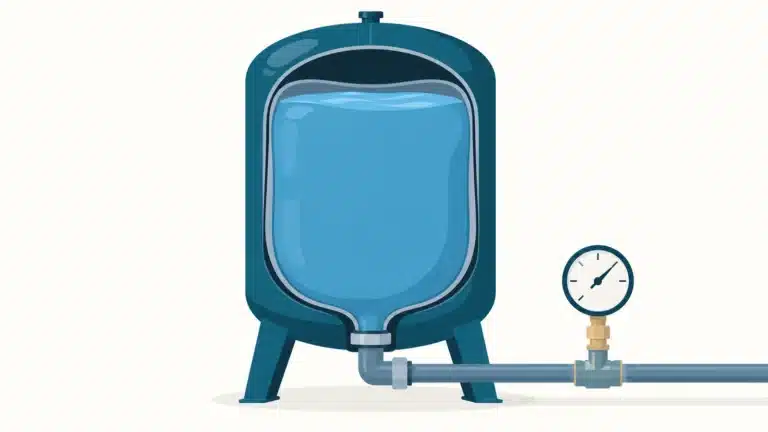
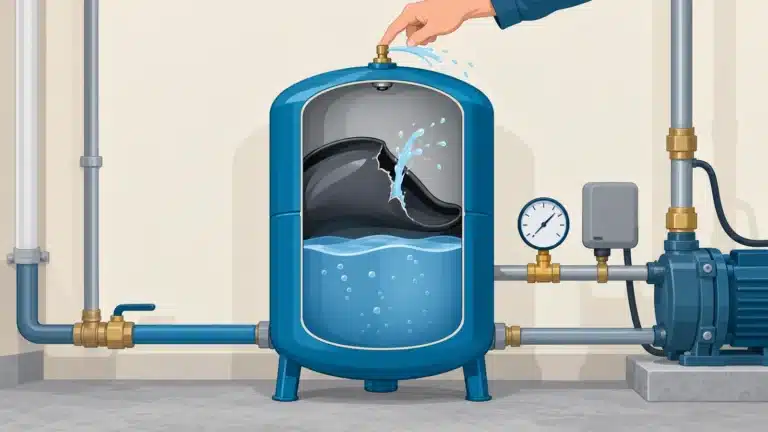
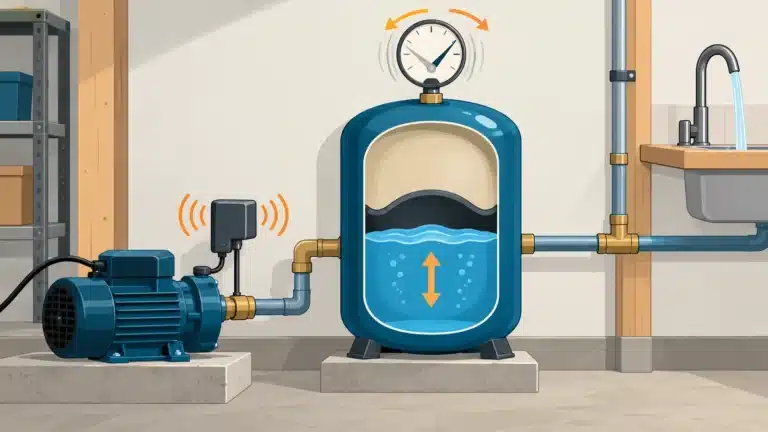
A new pressure tank typically adds $500 to $1,500 installed, and large tanks can cost more. It makes sense to replace both when the tank is waterlogged, has a failed bladder or is near the end of its life, because a bad tank makes the pump short-cycle and wear out faster. Ask the installer to test the tank’s air pre-charge before deciding. See pressure tank waterlogged and pressure tank bladder failure for the signs.
Repair or replace the well pump?
A repair is often cheaper: HomeAdvisor puts typical well pump repairs between about $373 and $1,619, averaging around $970. Common repairs are a pressure switch, capacitor, control box or wiring fault. Replacement makes more sense when the pump motor itself has failed, the pump is old, or a repair would cost close to half the price of a new pump. Most submersible pumps last about 8 to 15 years.
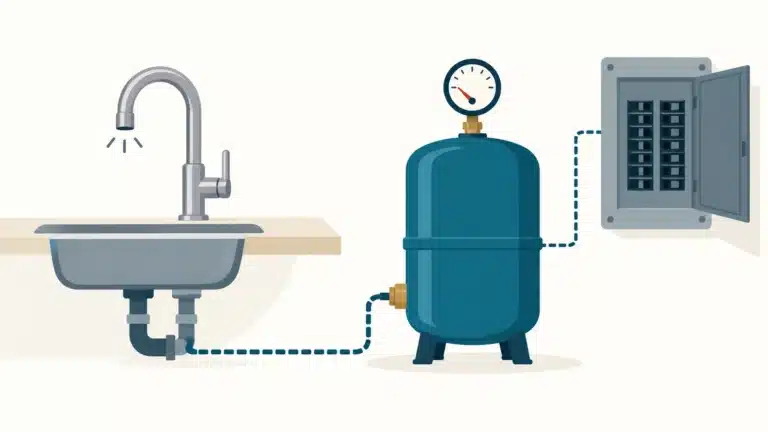
No water or frequent cycling does not by itself prove the pump has failed. A professional should rule out supply, controls, pressure-tank and piping problems before recommending replacement. Ask what evidence supports the diagnosis. Use no water from a well to organize the symptom, well pump not building pressure if it runs without building pressure, or well pump short cycling if it starts and stops repeatedly.
What should the quote include?
A pump-only price and an installed replacement quote cover different things. Ask the contractor to spell out the work rather than comparing only the headline total.
| Quote item | Question to ask |
|---|---|
| Pump and motor | Which exact model is proposed, and how was it selected for my well? |
| Pulling and reinstalling | What access or lifting equipment is required? |
| Drop pipe, cable, and connections | What will be reused, and what condition would require replacement? |
| Controls and pressure tank | Are they included, and what testing shows they need replacing? |
| Testing and return to service | What performance checks and water-quality precautions are included? |
| Additional charges | Are travel, emergency attendance, permits, taxes, and disposal included? |
Get comparable itemized quotes
- Send each contractor the same symptom description, pump model if known, well records, and access photos.
- Ask for a written diagnosis and an itemized repair or replacement scope.
- Separate necessary repairs from optional upgrades.
- Ask how hidden damage discovered after pulling the pump will be priced and approved.
- Compare equipment and labor warranties, response time, and aftercare alongside the total.
After the new pump goes in
Opening a well can introduce bacteria. Penn State Extension recommends shock-chlorinating the well after a new submersible pump is installed or the well is repaired, then testing the water for coliform bacteria about 10 to 14 days later. Ask whether disinfection is included in your quote.
Why this is not a DIY replacement guide
Well-pump work can involve electrical hazards, stored energy, heavy suspended equipment, and drinking-water protection. Do not open a control box, discharge a capacitor, or pull a submersible pump based on a generic cost article. Use a qualified well professional. Manufacturer support such as Franklin Water support can help identify the correct documentation.
How long does a well pump last?
Most submersible pumps last about 8 to 15 years; jet pumps often a little less. Frequent short-cycling from a waterlogged pressure tank, sediment and poor power supply all shorten pump life.
Why does a deeper well cost more?
A deeper setting needs a more powerful pump, more drop pipe and wire, and more time and equipment to pull and reset the pump. Each extra 100 feet of depth commonly adds several hundred dollars or more.
Does the national range include a new well?
No. These figures cover pump replacement. Drilling a new well, major rehabilitation, or extensive system changes are separate scopes and need their own estimate.
Is the cheapest quote the best choice?
Compare the specified equipment and included work first. A lower quote may omit testing, wiring, a necessary fitting, or labor coverage. Ask for those differences in writing.
Should I replace the pressure tank at the same time?
Only if testing shows it needs it. Ask for its condition and compatibility to be assessed. Do not assume it needs replacing simply because the pump does, or that keeping it is always appropriate.
Updated October 28, 2026. Written and edited by Jordan Hale. General educational guidance; follow your exact model instructions.