Well Pump Keeps Tripping the Breaker? Causes and What to Do
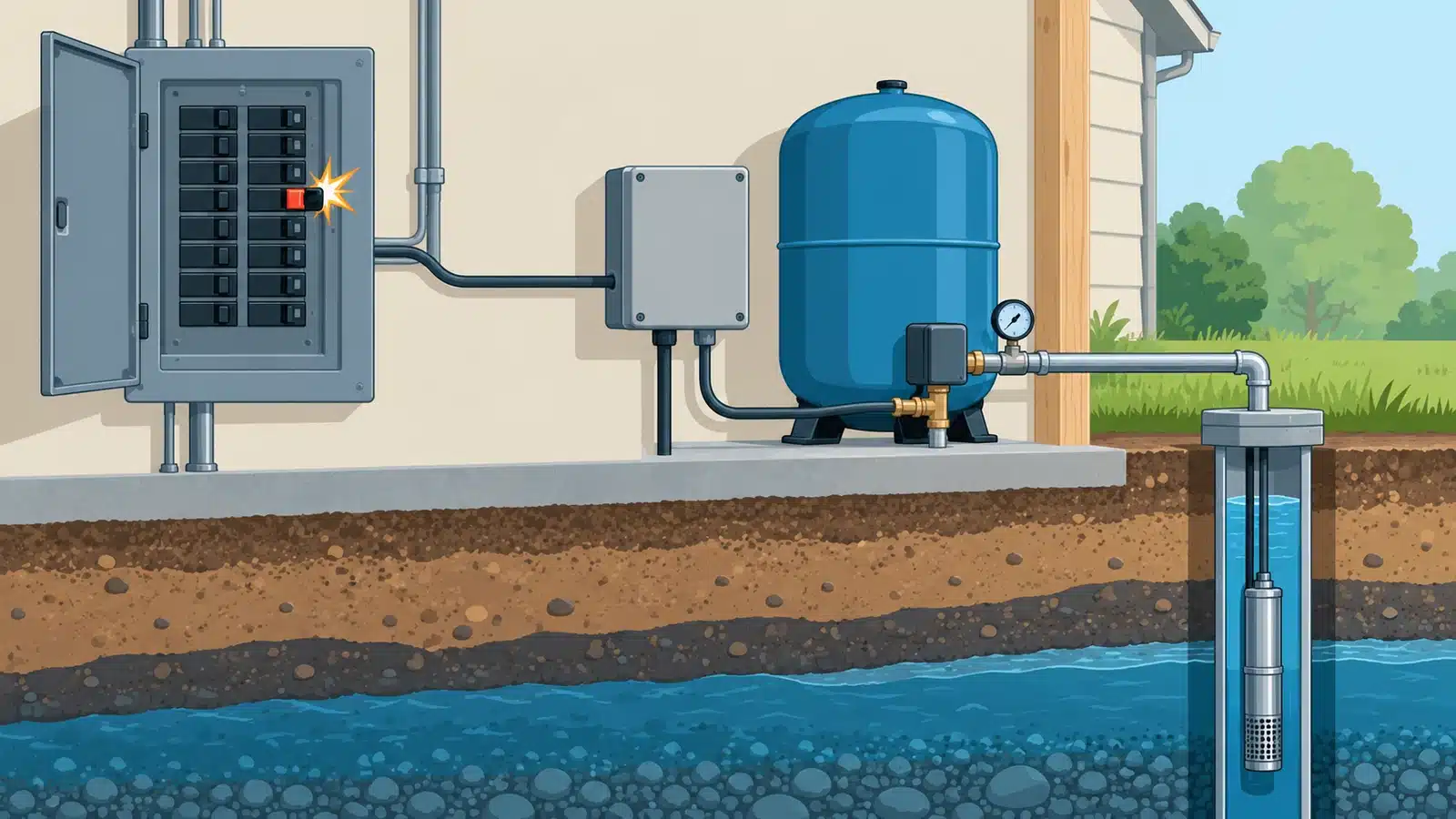
Quick answer: If your well pump keeps tripping the breaker, it is drawing more current than the circuit allows. Usually that is a short in the wiring or splices, a failing motor, a pump jammed with sand, a bad start capacitor or control box, low voltage, or a pump that starts so often it overheats. Reset the breaker once. If it trips again, leave it off and call a well contractor or electrician: repeated resets can damage the motor and are a fire risk. When it trips is the best clue to the cause.
Safety first: well pumps usually run on 240 volts. Do not open the control box, the pressure switch or the well cap, and do not test wiring yourself. Never replace the breaker with a bigger one to stop it tripping; the breaker is protecting the wire and the motor.
In this guide
When it trips tells you why
| What happens | Most likely cause | Next step |
|---|---|---|
| Trips the instant you reset it | A dead short: damaged wiring, a failed splice or a shorted motor | Leave it off; electrician or well contractor |
| Trips a few seconds after the pump tries to start | Pump jammed with sand, a failed start capacitor or relay in the control box, or low voltage | Leave it off; well contractor |
| Runs for a while, then trips | Overheating: the pump starting too often, low voltage, loose connections or a worn motor | Check for short cycling (below), then call |
| Started after a thunderstorm or power surge | Surge damage to the control box, pressure switch or motor | Well contractor |
| Only trips now and then, with no pattern | A loose connection, a weak breaker or an intermittent short | Electrician to check the panel and wiring |
Why a well pump keeps tripping the breaker
1. Damaged wiring, splices or a short to ground
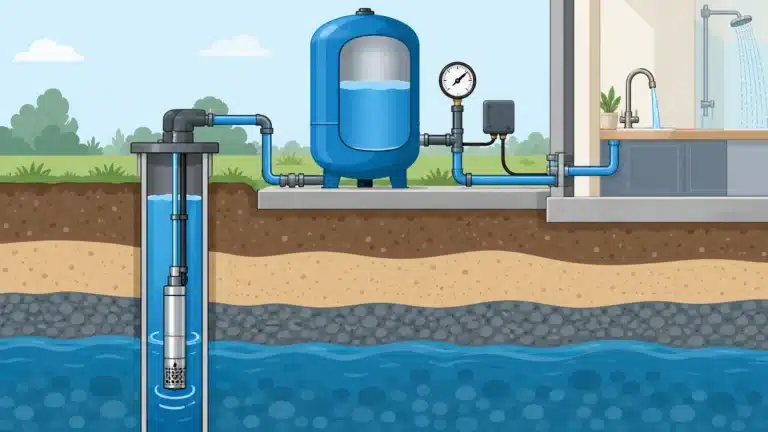
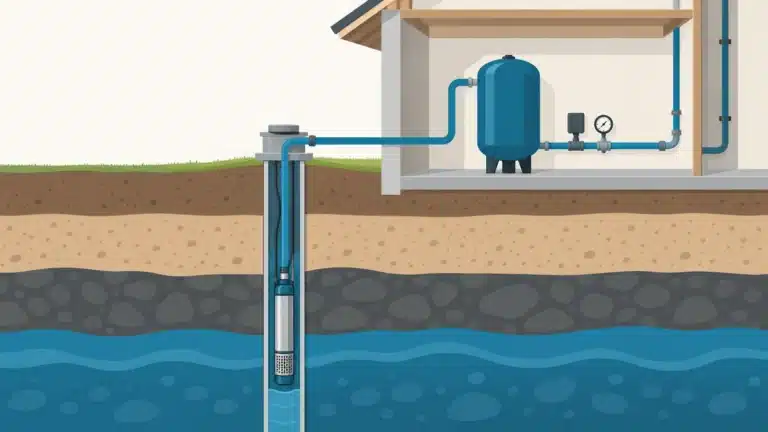
The cable runs from the house to the well and down to the pump, with splices at the well head and at the motor. A nicked buried cable, a corroded splice or worn insulation inside the well can short to ground. InspectApedia describes a case where a nick in buried pump wire left “enough missing insulation to trip the breaker.” A breaker that trips immediately on reset points this way. An electrician or well contractor tests the wiring and motor with the power off to find the short.
2. A failing or shorted motor
As a submersible motor ages, its windings or insulation can break down and draw too much current or short out. InspectApedia’s rule of thumb is that if the external wiring tests fine, the motor is shorted internally. A failed motor means pulling the pump.
3. A pump jammed with sand or debris
Sand or silt can lock the impeller so the motor cannot turn, which makes it draw very high current until the breaker or overload trips. InspectApedia notes that “a bad impeller can jam the pump, causing it to draw high current.” Sandy or cloudy water before the trouble started is a clue. See no water from well for the related symptoms.
4. A bad start capacitor, relay or control box
Three-wire submersible pumps have a control box in the house with a start capacitor and relay. If these fail, the motor cannot start properly and draws heavy current, often humming before the breaker trips. Burnt smells, melted parts or a bulging capacitor are signs, but the box holds live parts and a charged capacitor, so leave the inspection to a professional. R.C. Worst, a pump distributor, notes that heat and age take a toll on control boxes and suggests replacement when one is over 10 years old.
5. Low or wrong voltage
A motor on low voltage draws more current and runs hot. Franklin Electric’s manual says supply voltage must be within plus or minus 10% of the motor’s rating. Undersized or very long wire runs, loose connections in the panel or a utility problem can all drop the voltage. An electrician measures it while the pump starts and runs.
6. The pump is starting too often (short cycling)
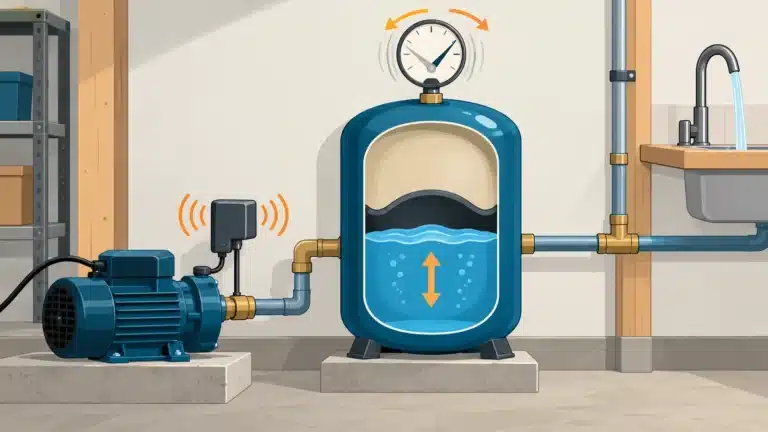
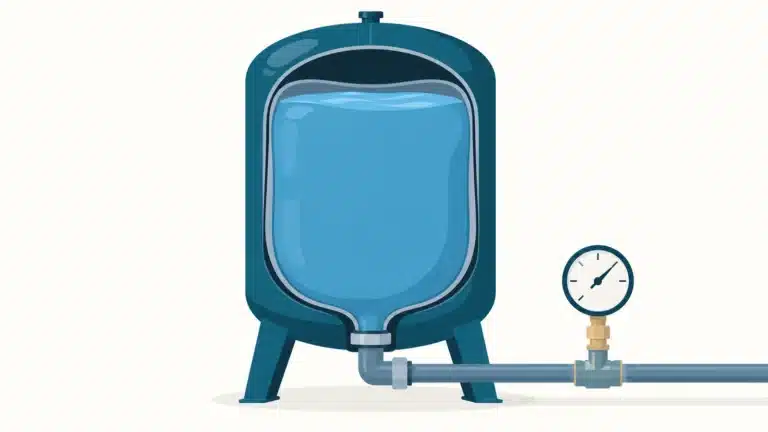
Every start pulls a surge of current and heats the motor. Franklin Electric says motors should run “a minimum of one minute to dissipate heat build up from starting current.” A waterlogged pressure tank, a leaking check valve or a leak in the system makes the pump start every few seconds, and the heat can eventually trip the breaker or the motor’s overload. If the pump clicks on and off rapidly when water runs, start with well pump short cycling and checking the tank’s air pre-charge.
7. A faulty pressure switch or breaker
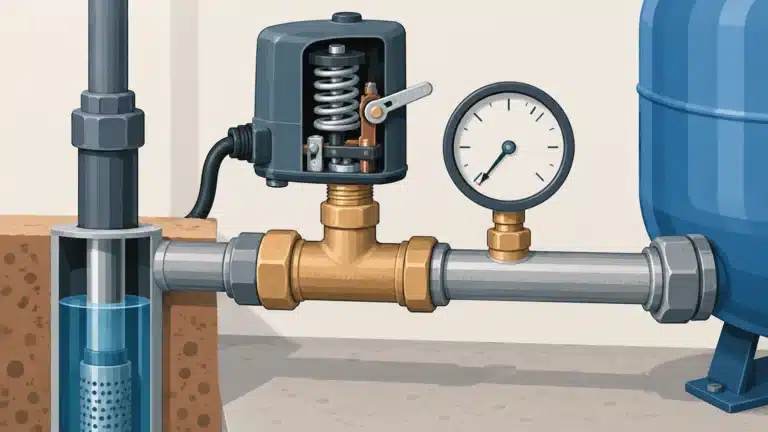
Burnt or pitted pressure switch contacts can arc and overheat, and a breaker that is old, loose on its bus or weakened by many trips can trip below its rating. Both are electrician work; the switch is live whenever the power is on. See pressure switch not turning on.
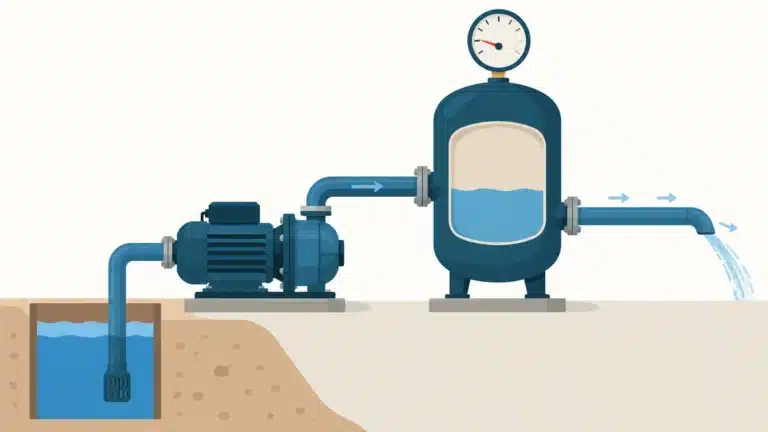
Jet pumps: above-ground jet pumps for shallow wells often have a thermal overload on the motor as well as the breaker. Common causes are low voltage, wiring or sizing that does not match the supply, and an impeller rubbing the pump case. See shallow well pump troubleshooting.
What you can safely check
- Reset once. Switch the breaker fully off, then on. Note exactly when it trips again: instantly, after a few seconds, or after running for a while.
- Look and listen, without opening anything. A burning smell, scorch marks on the control box or pressure switch cover, or a loud hum before the trip all mean leave the power off.
- Watch the pressure gauge while someone runs a tap, if the pump runs at all. A gauge that jumps up and down every few seconds means short cycling; check the tank’s air charge with the pump off.
- Think back: a recent storm or outage, new sand or cloudiness in the water, a drought, or digging near the buried well line are all useful clues.
- Call a well contractor if the clues point to the pump, control box or well, or an electrician if they point to the panel or wiring. Give them your notes.
Without the pump you have no water, so keep a few gallons of water stored for flushing and drinking until it is fixed.
Use a licensed electrician or qualified well contractor for any electrical test or repair. Suggest a guide or report a correction.
What a repair usually costs
HomeAdvisor’s well pump repair cost guide (updated June 19, 2026) gives these typical installed prices:
| Repair | Typical cost (installed) |
|---|---|
| Pressure switch | $120 to $175 |
| Start capacitor | $100 to $150 |
| Control box | $200 to $500 |
| Pump replacement | $970 to $2,800 |
Finding a short in buried cable or inside the well adds diagnostic time, and anything inside the well adds the cost of pulling the pump. Before agreeing to a new pump, use our well pump replacement cost and quote checklist.
Frequently asked questions
Why does my well pump keep tripping the breaker?
The pump circuit is drawing too much current. The usual causes are a short in the wiring or splices, a failing motor, a pump jammed with sand, a bad capacitor or control box, low voltage, or a pump that starts so often it overheats. When it trips (instantly, after a few seconds or after running) narrows it down.
Why does my well pump breaker trip immediately after I reset it?
An immediate trip usually means a dead short somewhere in the wiring, a splice or the motor. Do not keep resetting it. Leave the breaker off and have the circuit tested.
Can I just put in a bigger breaker?
No. The breaker is sized to protect the wire and the motor. A bigger breaker would let an overloaded circuit overheat instead of tripping, which risks a fire and burns out the motor. The right breaker size comes from the motor’s nameplate and the control box label.
What are the signs of a failing well pump?
Pressure that will not build, sputtering or cloudy water, a pump that runs constantly or switches on and off rapidly, unusual noises, a rising electric bill, and a breaker that trips are all common signs. See well pump runs but no pressure.
How long does a well pump usually last?
It varies widely with water quality, sand, how often the pump cycles and whether it is correctly sized. Age alone does not decide it; an older pump that has started tripping the breaker is a good reason to compare the cost of repair with replacement.
Can a power outage or storm make the well pump trip the breaker?
Yes. A surge from lightning or the power coming back on can damage the control box, pressure switch or motor. If tripping started right after a storm, tell the well contractor; a surge arrester may be worth adding once it is repaired.
Related: No water from well · Well pump keeps running · Well pump short cycling
Sources: Franklin Electric AIM manual (submersible systems) · InspectApedia: well pump wiring troubleshooting · R.C. Worst: overloads tripping · BCcampus plumbing text: jet pump troubleshooting chart · HomeAdvisor: well pump repair cost. Follow your equipment’s manual and labels.
Updated October 22, 2026. Written and edited by Jordan Hale. General educational guidance; electrical and well work is for licensed professionals.