Frozen Septic System: Signs, What to Do and How to Prevent It
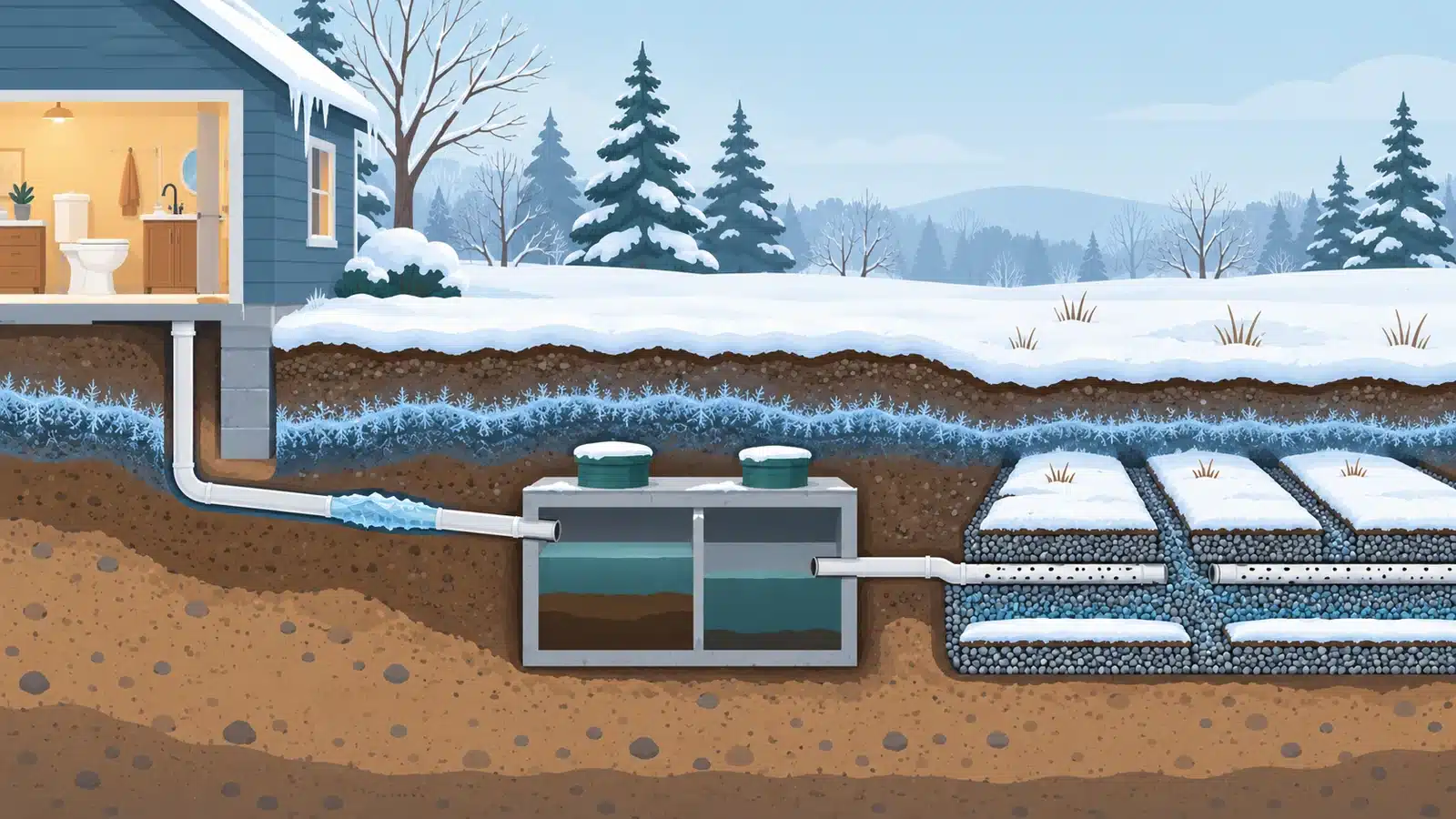
Quick answer: In a frozen septic system, the ice can be in the pipe from the house to the tank, in the tank, in the pipe to the drain field, or in the drain field itself. Signs are drains that slow and then stop, sewage backing up, a pump tank alarm, or wet ground over the system. If it freezes, call a licensed septic professional: they thaw lines with steamers, jetters or heat tape, or pump the tank and use it as a holding tank until spring. Never add antifreeze or salt, never light a fire over the system, and do not leave water running to thaw it.
Safety first: do not open or enter the tank, and keep lids secured. Sewage that surfaces outdoors is a health hazard: keep children and pets away and do not pump it onto the ground.
In this guide
Where a septic system freezes
| Part | What you notice | Usual cause |
|---|---|---|
| Pipe from the house to the tank | All drains slow, then back up into the lowest fixture | A slow trickle that freezes in layers, a sag in the pipe, little snow cover |
| Septic tank | Backups; ice at the top of the tank if inspected | Low use, open or uninsulated risers or lids |
| Pipe to the drain field, or the pump tank | Pump tank alarm, pump running constantly | Water standing in the line, poor slope, a pump that cannot push into frozen pipe |
| Drain field | Backups, wet or soggy ground over the field | Compacted soil, no snow or plant cover, the field already overloaded |
Why septic systems freeze
University of Minnesota Extension lists these common causes:
- Little snow cover early in a cold winter. Snow is good insulation; North Dakota State University notes that more than 12 inches gives significant frost protection.
- Compacted soil from vehicles, foot traffic or snowmobiles over the tank, pipes or field.
- No plant cover over the system.
- Irregular use, such as a cabin or a house left empty.
- Continuous trickles from leaking fixtures, a running toilet or high-efficiency furnace condensate, which freeze in layers inside the pipe.
- Pipes that are not sloped properly, so water sits and freezes.
- Uninsulated or open risers and lids.
- A system already failing, with water standing in the drain field.
Signs of a frozen septic system
- Drains that slow down, then stop, in cold weather.
- Sewage backing up into a floor drain, shower or the lowest toilet.
- A pump tank alarm, or a pump that runs constantly. University of Minnesota Extension says to shut the pump off and call a professional; see septic alarm going off.
- Sewage or wet, soggy ground showing over the tank or drain field.
- Gurgling drains or sewer odors, which can also be a blockage; see septic tank blockage.
What to do if your septic system freezes
- Cut water use right away. Every gallon sent down a frozen system can back up into the house.
- Fix any dripping fixture or running toilet so it stops feeding ice into the line.
- Call a licensed septic professional. The Minnesota Pollution Control Agency says professionals use cameras, heat tape, tank heaters, steamers and high-pressure jetters to find and thaw frozen areas.
- If the drain field is frozen, thawing the pipe will not help: University of Minnesota Extension says a frozen field cannot take liquid until spring. The fix is to have the tank pumped regularly by a licensed maintainer and use it as a holding tank until the ground thaws, as both MPCA and University of Minnesota describe.
- Once it is working again, ask the professional why it froze (slope, insulation, a leak) so it does not happen next winter.
What not to do
Both MPCA and University of Minnesota Extension warn against these:
- Do not add antifreeze, salt or septic additives to the system.
- Do not pump sewage onto the ground.
- Do not start a fire over the system to thaw it.
- Do not run water continually to try to unfreeze it; it adds more water to freeze and can overload the system.
- Do not pour boiling water or chemicals down drains to thaw a buried line; they will not reach far enough and can damage pipes. Leave thawing to a professional.
How to keep a septic system from freezing
- Insulate before the cold: University of Minnesota Extension suggests 8 to 12 inches of loose mulch, such as straw or leaves, over the pipes, tank and drain field. Do not add mulch to a system that is already frozen, because it keeps the frost in longer in spring.
- Let grass grow longer over the system in fall, and leave the snow on it.
- Keep traffic off: no vehicles, snowmobiles or packed paths over the tank, lines or field.
- Use water normally and spread it out, such as laundry spread through the week.
- Fix leaks and drips so there is no slow trickle into the line.
- Seal and insulate risers and lids.
- Leaving for the winter? MPCA and University of Minnesota suggest having the tank pumped before a long absence. In high water-table areas, check first that the tank is designed to be emptied.
Call a licensed septic service provider. Thawing frozen lines and pumping a tank are professional jobs. Suggest a guide or report a correction.
Frequently asked questions
What can I pour down the drain to unfreeze a septic line?
Nothing. MPCA and University of Minnesota Extension warn against adding antifreeze, salt or additives, and hot water poured down a drain will not reach a frozen line far underground. A septic professional thaws it with a steamer, jetter or heat tape.
Will a frozen septic system thaw on its own?
Eventually, in spring, but the system cannot be used normally until then. A frozen drain field usually stays frozen all winter, so the tank may need to be pumped as a holding tank in the meantime.
Can I keep using my toilet if the septic is frozen?
Only as little as possible, and only until a professional has looked at it. If drains are backing up, stop using water entirely until it is thawed or the tank is pumped.
Does snow help keep a septic system from freezing?
Yes. Snow is good insulation, and North Dakota State University notes that more than 12 inches gives significant frost protection. Do not plow or pack snow over the system.
How much does it cost to thaw a frozen septic line?
It varies with how far the freeze goes and how the line is reached. Ask for a quote that covers locating the frozen section, thawing it and, if needed, pumping the tank.
Related: Septic system troubleshooting · Septic alarm going off · Septic tank overflowing · Frozen sump pump discharge line
Sources: University of Minnesota Extension: seasonal septic care · Minnesota Pollution Control Agency: don’t let your septic system freeze · NDSU Extension: preventing frozen septic systems. Follow local rules and your septic professional’s advice.
Updated October 22, 2026. Written and edited by Jordan Hale. General educational guidance; septic work is for licensed professionals.